


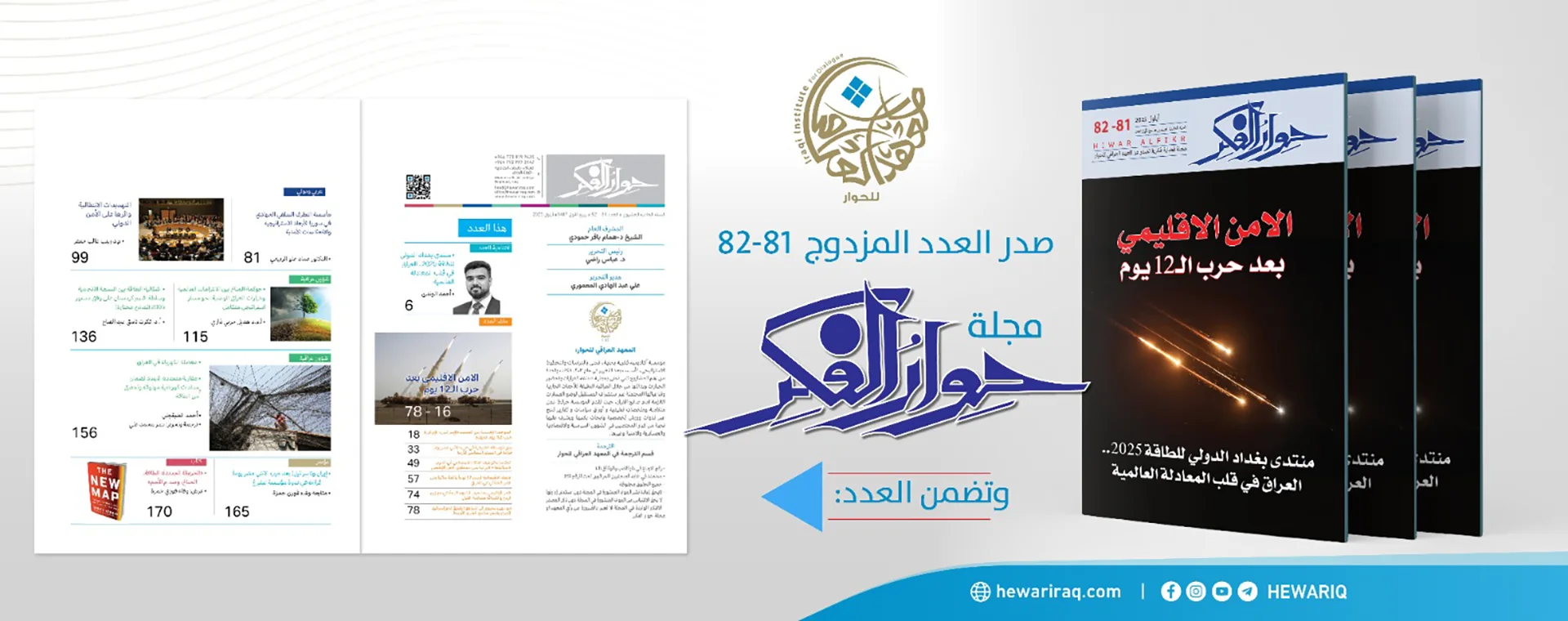
Abstracts of the double issue (81-82) of Dialogue of Thought
Regional attitudes towards the (Israeli-Iranian) escalation: The 12-day war as an example
Dr. Ali Saadi Abdul Zahra
The research examines regional attitudes towards the (Israeli-Iranian) escalation during the 12-day war that broke out in June 2025 following Israel's massive attack on Iran's nuclear facilities as part of Operation Lion Rising, and Iran's response with Operation Honest Promise 3, which included the launch of hundreds of rockets and marches on Israeli cities. Despite the heavy losses incurred by both sides, the war ended without Israel and the United States achieving their stated goals of destroying Iran's nuclear program or toppling the regime.
On the military level, Israel succeeded in assassinating prominent Iranian leaders and delivering effective strikes on nuclear facilities and infrastructure. However, Iran was able to absorb the blow by quickly replacing its leaders and launching massive missile waves that demonstrated the limitations of Israeli defenses and led to extensive human and material losses inside Israel, as well as paralyzing public life and closing the airspace. These developments gave the Iranian regime internal momentum and unprecedented popular unity in the face of the external threat.
On the economic front, Iran suffered billions of dollars in losses as a result of the destruction of energy facilities and infrastructure, in addition to heavy human and scientific losses. On the other hand, Israel suffered about $3-12 billion in direct and indirect losses, and its economy was almost completely paralyzed throughout the war, making the conflict more costly than its previous confrontations with resistance movements.
Regionally, most countries were unanimous in their condemnation of the war and rejection of escalation. The Gulf Cooperation Council (GCC) countries expressed official positions rejecting the Israeli and American attack, affirming their commitment to international law and calling for calm, with slight differences between Saudi Arabia, which took a balanced position seeking to protect its interests and highlight the independence of its decision, and the UAE, which showed tacit diplomatic support for Israel due to normalization relations. Iran's targeting of Qatar's al-Udeid base in Qatar was a sensitive turning point that elicited unequivocal Gulf rejection.
For its part, Turkey condemned the Israeli attack and sought to capitalize on it diplomatically by presenting itself as a mediator in the conflict, thus strengthening its regional and international role, while still rejecting the idea of Iran's possession of nuclear weapons. Iraq maintained a cautious approach, officially condemning the escalation and calling for a Security Council session, but remained neutral to avoid internal and regional repercussions, while the armed factions adhered to a policy of disassociation.
Pakistan, on the other hand, has adopted a position of strong support for Iran, based on strategic and popular considerations, in light of its historical hostility to India and the latter's alliance with Israel, which added a new dimension to the conflict and raised questions about its repercussions on regional and international balances.
The research concludes that the war, despite its short duration, redrew the lines of regional balance, weakened confidence in Israeli defense capabilities, and gave Iran internal political and moral gains, while regional positions highlighted that the majority of regional countries refuse to slide into a comprehensive confrontation and adhere to diplomacy as a way to avoid catastrophic repercussions on regional and international security.
- 2 -
Gulf Mediation in the Twelve-Day War: A Reading of the Political Context of the Crisis
M.M. Marwan Mohammed Abboud
The research addresses the role played by the Arab Gulf states during the twelve-day war (June 13-25, 2025) between Iran and Israel, which constituted a pivotal stage in the course of regional escalation, as Israel directly targeted Iranian territory with extensive air strikes targeting military and scientific leaders and nuclear facilities in Natanz and Fordo, which led to a violent Iranian response with missiles and drones on the Israeli depths. This war, despite its short duration, showed the fragility of regional security, and raised the fear of Gulf countries about its repercussions on regional stability, energy security, and shipping lanes.
The research focuses on the importance of Gulf mediation in this crisis as one of the outcomes of the war, as the efforts of countries such as Qatar, Saudi Arabia, and Oman emerged, which moved diplomatically in an attempt to end the Israeli aggression and de-escalate the escalation. This mediation was characterized by being indirect, as it did not take place between Iran and Israel directly, but rather focused on conveying messages between Iran and the United States as the most influential party on the Israeli decision.
The research analyzes three main tracks of Gulf mediation:
Qatar's mediation relied on its balanced relations with Iran and the United States, and capitalized on its role as a regional soft power acceptable to the conflicting parties.
Omani mediation, which continued its traditional approach based on neutrality and conveyed Iranian views to Washington, especially with regard to the nuclear file.
Saudi mediation, which sought through direct contacts with Washington and Tehran to stop the escalation, in light of its keenness to protect its development projects and prevent the region from sliding into a full-scale war.
The research concluded that the Gulf mediation, despite its limitations, contributed to bridging the differences and stopping the war, and gave a new impetus to Gulf-Iranian relations after years of tension. This experience also had an impact on the status of the Gulf states, enhancing their image as mediating powers in the regional system and contributing to the redefinition of security threats so that Iran is no longer the only source of danger, but Israel's aggressive policies have emerged as a direct threat to the security of the Gulf.
The researcher emphasizes that the success of Gulf mediation still depends on the ability of these countries to maintain relative neutrality, develop their efforts towards joint institutional work within the GCC, and link them to broader international initiatives, enabling them to become a key regional actor in conflict management.
- 3 -
The implications of the use of artificial intelligence in the Israeli-Iranian war on the future of regional security
Dr. Bassem Ali Khrisan
This research addresses the issue of the use of artificial intelligence in the recent Israel-Iran war, highlighting how this conflict represented a qualitative model of what is known as "smart wars" or "artificial intelligence wars" in terms of the nature of the tools used and the breadth of operations to include physical, technical, cyber, and media space.
I. AI as a key player in modern warfare:
The researcher points out that AI has become a strategic shift in the structure of warfare, similar to the change brought about by nuclear weapons in the twentieth century. New technologies such as sensors, data analysis, and machine learning have enabled major countries such as China, the United States, and Russia to develop autonomous weapons capable of making autonomous decisions on the battlefield. These developments have raised growing concerns about the lack of legal and ethical controls, as well as the threat to the principle of "meaningful human control".
Second, the use of artificial intelligence in the Israel-Iran war:
The research showed that both sides, Israel and Iran, relied on AI to manage battles. Israel focused on integrating AI into defense and attack systems, such as the use of drones, targeting algorithms, and command and control systems to speed up decisions and reduce casualties. Israel's military operation "Lion of the Sun" (June 13, 2025) was a prime example of this, where AI technologies were used to disrupt Iranian air defenses and assassinate key figures. On the other hand, Iran and its allies have used generative AI to produce fake clips and videos to enhance their narrative and confuse public opinion, as well as cyberattacks targeting Israel's critical infrastructure.
III. Implications for regional security:
The researcher emphasizes that the use of AI in this war reflects the beginning of a new phase in the nature of conflicts in the Middle East, where algorithms and intelligent systems have become centralized tools. The implications are manifested in several dimensions:
Accelerating the smart arms race: State competition to develop AI-based offensive and defensive capabilities exacerbates the fragility of regional stability.
Changing the nature of threat and deterrence: Cyber and digital attacks have become an integral part of the tools of warfare, weakening the effectiveness of traditional deterrence.
Undermine disarmament efforts: AI can enhance surveillance, but it can also be used to undermine trust and increase the potential for escalation.
Governance challenges: The absence of an international legal framework regulating the military use of AI opens the door to multiple risks.
Conclusion:
Dr. Bassem Ali Khrisan concludes that the recent Israeli-Iranian war represented a turning point in the patterns of regional wars, as artificial intelligence has become not just an auxiliary tool but a strategic weapon. Despite the opportunities it provides to enhance defense capabilities, it multiplies the risks of escalation and threatens regional security and stability, which necessitates building regulatory frameworks and effective regional and international cooperation to control the use of this technology in the military field and ensure that it does not become a permanent factor of instability.
- 4 -
The economic dimensions of the 12-day war and its implications for food security in Iraq
Dr. Zuhair Saadi Hassoun Saadi
The research addresses the economic dimensions of the 12-day war and its repercussions on food security in Iraq, as one of the most important pillars of economic and social security, which suffers from structural fragility due to excessive reliance on imports to cover basic needs. The war, despite its short duration, was a practical example of the extent of Iraq's vulnerability to external fluctuations, as it led to an increase in food and energy prices and the disruption of supply chains, which directly affected the livelihood of Iraqi families, especially the poor.
The research issue is Iraq's inability to achieve food self-sufficiency, despite its significant natural and human resources, and its vulnerability to market fluctuations and regional crises. The objectives of the research focused on analyzing the economic repercussions of the war, diagnosing the gap between production and consumption, and highlighting the role of the Ministries of Agriculture and Industry in enhancing food security.
The researcher adopted an analytical-statistical approach based on data from the Ministries of Planning and Agriculture and the Central Statistical Organization, which highlighted a chronic food gap, especially in wheat, rice, oils, dairy, and red meat. The tables showed that Iraq imports between 50-70% of its food needs, while self-sufficiency in wheat, for example, does not exceed 45-53% in recent years.
The analysis showed that the 12-day war exposed the Iraqi economy's weak ability to absorb shocks. It led to a 12-15% increase in the price of imported goods, an increase in agricultural production costs due to higher fuel prices, and a direct threat to households' ability to access sufficient food. The data showed that about 23% of households already suffer from food insecurity to varying degrees, and that half of the income of poor households is spent on food.
The research concluded with several key findings, the most important of which are: The continued high dependence on imports, the absence of an integrated national strategy for food security, the weak integration between agriculture and industry, and the diminishing role of the concerned ministries in formulating effective development policies.
Based on this, the research provided a set of recommendations, most notably: Enhancing local agricultural production by subsidizing strategic crops (such as wheat and rice), developing food processing industries, improving water resources management, diversifying import sources, and encouraging investment and agricultural scientific research. It also called for the formulation of a comprehensive national strategy for food security as part of the national security system.
Thus, the research emphasizes that addressing the fragility of Iraq's food security requires a deep structural reform that links agricultural and industrial development and transforms food security into a fundamental pillar of economic and social security and a guarantee of national stability in the face of external shocks.
- 5 -
From Ariel Sharon to Netanyahu: The Road to Greater Israel and a Changing Middle East
Ahmed Abedi
This paper reviews the shifts in Israeli thought and policy from the Ariel Sharon era to the Benjamin Netanyahu era, showing how the "Greater Israel" project has remained a constant strategic goal despite the change in methods and tools. In Sharon's time, expansion was managed more quietly and gradually, by intensifying settlements, building the separation wall, and strengthening security control in the Palestinian territories, while keeping the public rhetoric less strident.
Under Netanyahu, the expansionist project has turned into an open and explicit discourse, through the presentation of the "Greater Israel Map" that goes beyond the 1967 borders, and expresses the conviction of the ruling right-wing movement that there is a historic opportunity to strengthen Israeli hegemony in light of the regional turmoil and the weakness of the Arab position, in addition to the decline in the effectiveness of international organizations and the paralysis of the Security Council due to the US veto.
The researcher asserts that the recent war between Israel and Iran, known as the "Twelve-Day War," was a watershed moment that revealed the Israeli entity's vulnerability to missile and cyber attacks and weakened the image of absolute deterrence that it had sought to perpetuate over decades. The confrontation also reinforced the resistance narrative and prompted some regional regimes to reconsider their reliance on Israel as a guarantor of security.
The research concludes that the transition from silent expansion under Sharon to overt expansion under Netanyahu reflects a shift in Israeli strategy and indicates that the region has entered a new phase characterized by the decline in the effectiveness of international law, the escalation of the arms race, and increasing risks to regional security and stability.
- 6 -
The Institutionalization of Salafi-Jihadi Extremism in Syria: Strategic Dimensions and Security Implications
Retired Major General Dr. Imad Hadi Alo Al-Rubaie
This paper examines the phenomenon of Salafi-jihadi foreign fighters in Syria as one of the most prominent manifestations of the shifts in unconventional warfare during the last two decades, and its regional and international strategic and security implications. The researcher notes that the phenomenon of foreign fighters began with the US invasion of Iraq in 2003, as the country turned into a major attraction for fighters from Arab and Islamic countries across the Syrian, Jordanian and Saudi borders. Al-Qaeda in Mesopotamia, led by Abu Musab al-Zarqawi, played a pivotal role in attracting these fighters, especially in suicide operations and sectarian violence.
With the outbreak of the Syrian crisis in 2011, Syria became a major gathering center for foreign fighters, especially Uyghurs from China and Central Asia, who joined the ranks of groups such as Jabhat al-Nusra and ISIS. By 2015, there were an estimated 7,000 Uyghur fighters in northern Syria, mostly based in Idlib, Jisr al-Shughour, and Sahl al-Ghab. These fighters served as a military lever for groups such as Jabhat al-Nusra and Hayat Tahrir al-Sham, and contributed to the capture of Idlib, Jisr al-Shughour, and Abu Dhuhur airport.
The research stops at the institutionalization of the Uyghur presence in Syria after the announcement of the formation of the 84th Special Forces Division in 2025, which included about 3,500 foreign fighters, the majority of whom are Uyghurs. This development came within the framework of understandings between the new Syrian government and Washington, with Turkish blessing, which raised the concern of China and Russia, especially with the desire of some fighters to return to Xinjiang to continue the struggle against Beijing
On the regional and international level, the research highlights the contradiction in the Turkish position between supporting the Uyghurs due to national and religious ties on the one hand, and submitting to increasing Chinese pressure on the other, as Ankara seeks to gain gains in the Belt and Road project. It also points out that the United States used the designation and removal of the Turkistan Islamic Party from terrorist lists as a tool in its conflict with China, while allowing the integration of Uyghur fighters into the New Syrian Army under the pretext of preventing their involvement in more extremist organizations.
The researcher concludes that the localization of Uyghur fighters and the institutionalization of their military role in Syria opens the door to serious challenges to national and regional security. This path threatens to weaken the chances of building a unified Syrian army, strengthen external influence in the region, and could entrench Salafi-jihadist groups within official military institutions, heralding a new phase of conflict and instability in the Middle East.
- 7 -
Transitional Threats and their Impact on International Security
Dr. Zainab Ghalib Jaafar
The research examines the concept of transitional threats as a new security phenomenon that emerged in light of the geopolitical shifts after the Cold War and the consequent structural changes in the international system. The research indicates that the world no longer faces only traditional military threats, but non-traditional cross-border threats, including terrorism, organized crime, illegal migration, climate change, and pandemics, which are of a collective nature that transcends a single state and affects the entire international system.
I: Conceptualizing Transition Threats
Transitional threats are risks that transcend the geographical boundaries of states and affect several vital areas such as military security, economy, health, environment, and the political system. The research shows that the relationship between "risk" and "threat" is causal. Risk is an objective probability of harm, while threat adds a cognitive dimension and hostile intent by international or non-state actors, such as terrorist groups or organized crime networks.
II: Types of Transitional Threats
The research highlights several key patterns:
Climate change: Pose a global threat to water, food and environmental security, and may lead to armed conflicts and mass migrations. Melting ice and rising temperatures are increasing international tensions over resources.
Illegal migration: It is considered a threat to the internal security of receiving countries, as it may facilitate the entry of extremist groups or human smuggling networks, as well as increase economic and social burdens.
Environmental pollution: The challenge is that its effects are transboundary and cannot be contained nationally, as emissions, industrial and nuclear pollution threaten the global ecological balance.
Organized crime: It represents an internal and external threat with its ability to penetrate political and economic institutions, and its cross-border cooperation that promotes international destabilization.
III: The Future of Transitional Threats
The research emphasizes that the future of international security depends on the ability of states to formulate collective and effective responses to these threats. Lack of trust and divergent priorities
- 8 -
Climate governance between global commitments and Iraq's national choices: Toward an Integrated Strategic Path
Prof. Dr. Hadeel Harbi Thari
The research addresses the issue of climate change as one of the most prominent global challenges of the 21st century, due to its transboundary effects on environmental, water, food and economic security. It focuses on the case of Iraq as one of the most vulnerable countries to this phenomenon due to its high dependence on shared water resources and the weakness of its infrastructure, institutional and technological infrastructure. The researcher starts from the premise that Iraq's response to climate change depends on its ability to integrate its international commitments, such as the Paris Agreement (2015) and other UN frameworks, into its national policies and development plans, thus contributing to building an integrated strategic pathway for adaptation and mitigation.
The paper examines the global legal and institutional framework for climate governance, highlighting the importance of the United Nations Framework Convention on Climate Change (1992), the Kyoto Protocol (1997), the Paris Agreement, and the European Union Emissions Trading System (EU ETS), which established binding international mechanisms to reduce emissions and promote the transition to clean energy. It also highlights the role of international and regional organizations such as the United Nations, the European Union, the African Union, and the League of Arab States in coordinating and providing funding and technical support to developing countries.
At the national level, the research shows that Iraq has developed a range of environmental legislation and strategies, such as the Environmental Protection and Improvement Law No. 27 of 2009, the First National Communication (2016), the Nationally Determined Contributions Document (NDC 2021), the Environmental Protection Strategy 2024-2030, and the Iraq Climate Vision 2030. These documents constitute an important theoretical framework, but they suffer from weak implementation due to limited funding, weak institutional coordination, and heavy reliance on oil as the main source of revenue.
The research also highlights the environmental challenges facing Iraq, such as water scarcity as a result of dams in neighboring countries and the decline in rainfall rates, which has led to a 50% decrease in water reserves since 2021, with the deficit expected to reach 37% by 2030. In addition to the worsening desertification and soil salinization, which threatens 39% of Iraq's area, and the increasing rates of internal migration due to the degradation of agricultural lands and dust storms.
In conclusion, the researcher concludes that addressing the effects of climate change in Iraq requires building integrated climate governance based on strong institutions, sustainable financing, and integrating environmental, economic, and social dimensions. He also emphasizes that shifting towards a green economy, developing smart agriculture, and expanding the use of renewable energies represent strategic opportunities to reduce fragility and enhance national and regional security.
- 9 -
The Problematic Relationship between the Federal Authority and the Kurdistan Regional Authority According to the 2005 Constitution (Selected Models)
Ms.. Dr. Fikret Namik Abdel Fattah
This paper examines the constitutional and political issues arising from the relationship between the Iraqi federal government and the Kurdistan Regional Authority under the 2005 constitution. The researcher starts from the fact that federal systems usually assume a clear distribution of competencies between the center and the regions, so that sovereign issues (defense, foreign policy, finance) are monopolized by the federal authority, with local and joint powers. However, the Iraqi Constitution of 2005 violated this context in its Article 115, which gave precedence to regional and provincial laws over federal law in case of conflict, creating a state of disharmony and leading to frequent clashes between Baghdad and Erbil.
The research focuses on three main themes:
Distribution of powers: Article 110 limits sovereign powers to the federal government, while Article 115 leaves everything else to the regions, with their laws taking precedence. Articles 111 and 112 dealt with the management of oil and gas, but the ambiguity of the texts allowed the region to interpret them to its advantage by enacting its own oil law (2007), which led to sharp disagreements with the center.
Disputed territories: The author refers to the chronic disputes between the two parties, especially over the disputed areas (Article 140), especially Kirkuk, which has been a focal point for political, ethnic and economic conflicts. Baghdad has accused Erbil of signing international agreements without consulting the center, while Erbil has accused Baghdad of violating its financial obligations.
Political and constitutional implications: The researcher believes that these issues have contributed to the consolidation of a semi-separatist reality for the region, making it closer to a "state within a state". The ambiguity of the constitutional texts also opened the door to consensual political solutions instead of applying the law, which deepened the crisis of confidence and weakened the federal structure.
In the conclusion, Dr. Fikret asserts that the federal experience in Iraq is recent and fragile, and needs constitutional amendments that restore the balance between the center and the region. The most prominent proposals are: Amending Article 115 to prioritize federal law, expediting the enactment of the federal oil and gas law, conducting a comprehensive census, and resolving the issue of Kirkuk and the disputed areas within a constitutional framework. He also stressed the importance of prioritizing the national interest through dialogue and constitutional settlements that preserve the unity of Iraq and guarantee the rights of the components, considering that the Kurds' survival within a unified federal Iraq is the most realistic and geopolitical option for all parties.
- 10 -
Iraq's electricity dilemma: A Multidimensional Approach to Ensure Reliable Electricity Supply and Energy Security
Ahmed Tabakjali - Translated and edited by: Nasr Mohamed Ali
The research addresses the electricity dilemma in Iraq as one of the most prominent chronic structural crises that directly affect political, economic, and social stability. The researcher explains that the issue of electricity returns to the forefront of public debate whenever the summer season approaches or renewed US pressure on importing gas and electricity from Iran. Although a number of solutions have been proposed, such as exploiting associated gas, importing gas from neighboring countries, or relying on liquefied natural gas and renewable energy, these solutions have remained fragmented and piecemeal, without forming an integrated strategy that addresses the root of the issue.
The research indicates a growing gap between electricity supply and demand, with nominal generation capacity in 2023 amounting to 40.6 GW, while actual production was only 17.9 GW, equivalent to only 44% of the available capacity. This is due to three main factors: Lack of adequate gas supply, poor maintenance, and poor cooling equipment in the plants. The issue is compounded by transmission and distribution losses, which amounted to 59.3% of the electricity produced, as a result of technical obsolescence, theft, and meter tampering.
The research also highlights the financing challenges, as the Ministry of Electricity consumes ten times more operating and import expenditures than revenues. Poor collection and the absence of real commercial electricity tariffs have made the sector dependent on the federal budget, which burdens the state.
In the long term, population growth of 2.3 percent per year, reconstruction requirements, and increasing domestic consumption will further strain the grid. Although plans are in place to add 15 GW of new capacity and improve the efficiency of 13 GW of existing capacity, implementation still faces funding and bureaucratic challenges. The research also points to interconnection projects with Jordan, Turkey, and the Gulf states, as well as domestic gas and solar projects (3.5 GW by 2028), but these alone are insufficient without addressing structural and financial waste.
Conclusion:
The researcher believes that the electricity dilemma in Iraq cannot be solved through temporary measures or emergency imports, but rather through a strategic, multidimensional approach that addresses the generation, transmission, and distribution system, as well as financial reform of the energy sector. Without serious political will and long-term commitment, the electricity crisis will continue to recur annually, threatening Iraq's stability and energy security.
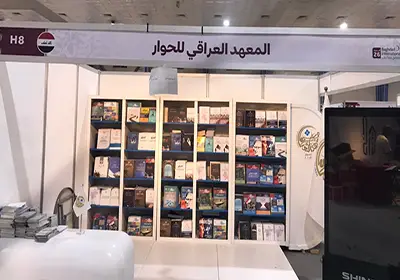
The Iraqi Institute for Dialogue, the logistical sponsor of the Baghdad International Book Fair, opens its own pavilion at the fair
Official agreement between Iraqi Institute for Dialogue and the Iraqi Media Network to sponsor The Seventh Annual International Conference of “Baghdad Dialogue” 2025
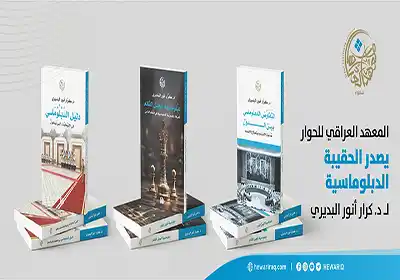
The Iraqi Institute for Dialogue publishes "The Diplomatic Portfolio" by Dr. Karrar Al-Badiri
Invitation to the 79th issue of Dialogue of Thought
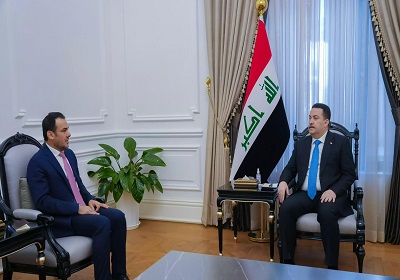
Prime Minister: The path of development will make Iraq a regional political and economic powerhouse
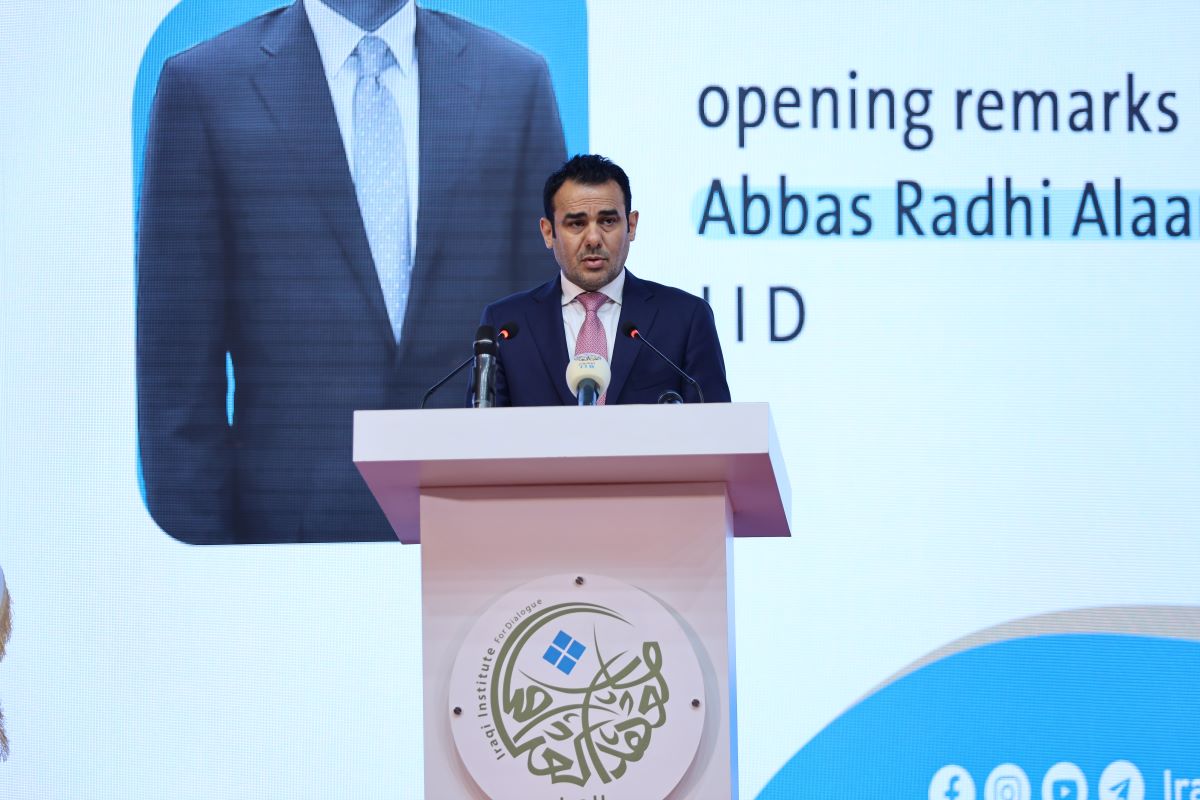
Speech of the Director of the Iraqi Institute for Dialog at the Sixth Baghdad International Dialog Conference
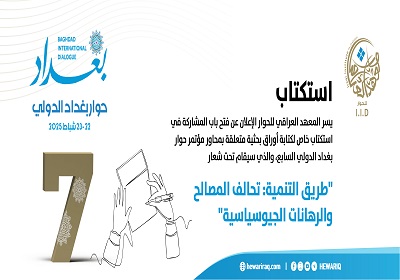
Seventh Baghdad International Dialogue Conference Call for Papers
Comments