



Asia's AI Ambitions: Progress Without Control
Across Asia, governments are pouring billions of dollars into artificial intelligence, as a pathway toward strategic autonomy and enhanced economic resilience. But Asia, despite massive investments in artificial intelligence and chips, is becoming less and less secure in technology policies.
Despite these massive investments, the most crucial points of control in the AI ecosystem remain in the hands of a limited number of powerful actors, led by the United States and its allies. Instead of giving Asia technical dominance, technological progress has failed to shield it from major-power competition, increasing its entanglement and dependence on a system of technological dependence.
Although many Asian countries are leading the production of advanced chips, actual power remains confined to a few game-defining “choke points.” Taiwan has outperformed others through TSMC, which produces about 90% of the most advanced semiconductors and supplies companies like Apple and Nvidia.
Similarly, South Korea's Samsung dominates advanced memory technologies, having become the main supplier of RAM for the iPhone 17 series, raising its share to between 60 and 70%. Dutch company ASML, its technology in extreme ultraviolet light (EUV) printing is an indispensable element for the production of advanced chips, making it a pivotal player in the global semiconductor industry. And yet these strengths coexist with a deeper fragility, namely that control of advanced AI systems remains highly concentrated.
External constraints reinforce this imbalance. The U.S. strictly controls exports of AI processors and software, restricting sales and associated autonomy, based on performance criteria such as memory bandwidth, and allows only conditional exports within tight licensing regimes, ensuring strategic control and politically sensitive access.
And yet other vital inputs remain highly concentrated, most notably rare earth metals, which play a key role in electronics and clean energy. China controls about 85-90% of global refining and processing capacity for these metals through 2024. Together, these dynamics reveal a fundamental paradox in Asia's AI goals: increased engagement in advanced technologies without parallel control over access.
But the deeper constraint for Asia is not hardware or capital, but bottlenecks in how AI systems are built and deployed. Standard setters, intellectual property regimes, supplier frameworks, and the mobility of competencies all set the conditions and shape who can scale up advanced technologies. Political and regulatory mechanisms, often designed outside Asia, determine access to global search networks, cloud infrastructure, and cross-border data flows.
And it’s harder to replicate these forms of control through investment alone, even though they have become the deciding factor in determining who can rapidly expand AI. For example, as it seeks to maintain its dominance in AI development, U.S. export controls are affecting AI chips in Asian countries that serve as transit hubs, forcing countries like Malaysia to impose new licensing rules on shipments of advanced chips.
And to counter these structural constraints, Asian countries have continued to accelerate investments in artificial intelligence and semiconductor capabilities. Asia’s ambitions in this area, however, exemplify a clear paradox: massive investments and growing capabilities, but constrained by access, norms, and levers of influence.
Remarkably, Asia's growing role in artificial intelligence and semiconductors serves a distinct function in favor of global technology companies seeking to hedge against geopolitical competition. By distributing R&D and manufacturing across Asia, they reduce their exposure to political shocks and underlying geopolitical drivers, without challenging the power structure of advanced technologies.
India’s expanding AI workforce, Southeast Asia’s manufacturing capacity, and East Asia’s industrial base all help companies manage risk and grow as the U.S. tightens its grip on AI hardware. And by adapting locally—as local chip producers in China or cloud service operators in Asia do—giants like Nvidia are revising their market forecasts in the face of revenue losses.
And so, while Asia may not be the center of production or the rulemaker in AI development, it certainly plays the role of a “risk absorber” for global tech companies facing geopolitical pressures.
The result is an increasingly unequal technological landscape in Asia. For Asian governments long accustomed to balancing major powers, this shift carries a special amount of instability. As Asia absorbs investments, efficiencies, and geopolitical risks, power over technology flows remains largely concentrated elsewhere. And as the integration of AI into economic planning and national security deepens, this imbalance narrows the margin of “progress with control” for Asian governments.
Although hedging and diversification policies still provide tactical flexibility, they no longer guarantee a genuine strategic option. In practice, Asia's growing technological capabilities do not expand its freedom of movement, but link the region more closely to decisions taken elsewhere.
And if the Asian quest for AI is seen as a path to independence and progress, it reflects a more harsh reality: innovation and investment increase integration without necessarily establishing control. Today, the question is no longer about who is building more AI labs, but who is setting the standards and rules for the technology. Hence, the challenge is not about who is technically catching up, but who manages their degree of exposure within a system where the most decisive decisions remain elusive.

The Iraqi Institute for Dialogue, the logistical sponsor of the Baghdad International Book Fair, opens its own pavilion at the fair
Official agreement between Iraqi Institute for Dialogue and the Iraqi Media Network to sponsor The Seventh Annual International Conference of “Baghdad Dialogue” 2025

The Iraqi Institute for Dialogue publishes "The Diplomatic Portfolio" by Dr. Karrar Al-Badiri

Invitation to the 79th issue of Dialogue of Thought
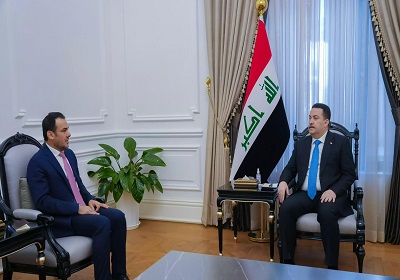
Prime Minister: The path of development will make Iraq a regional political and economic powerhouse
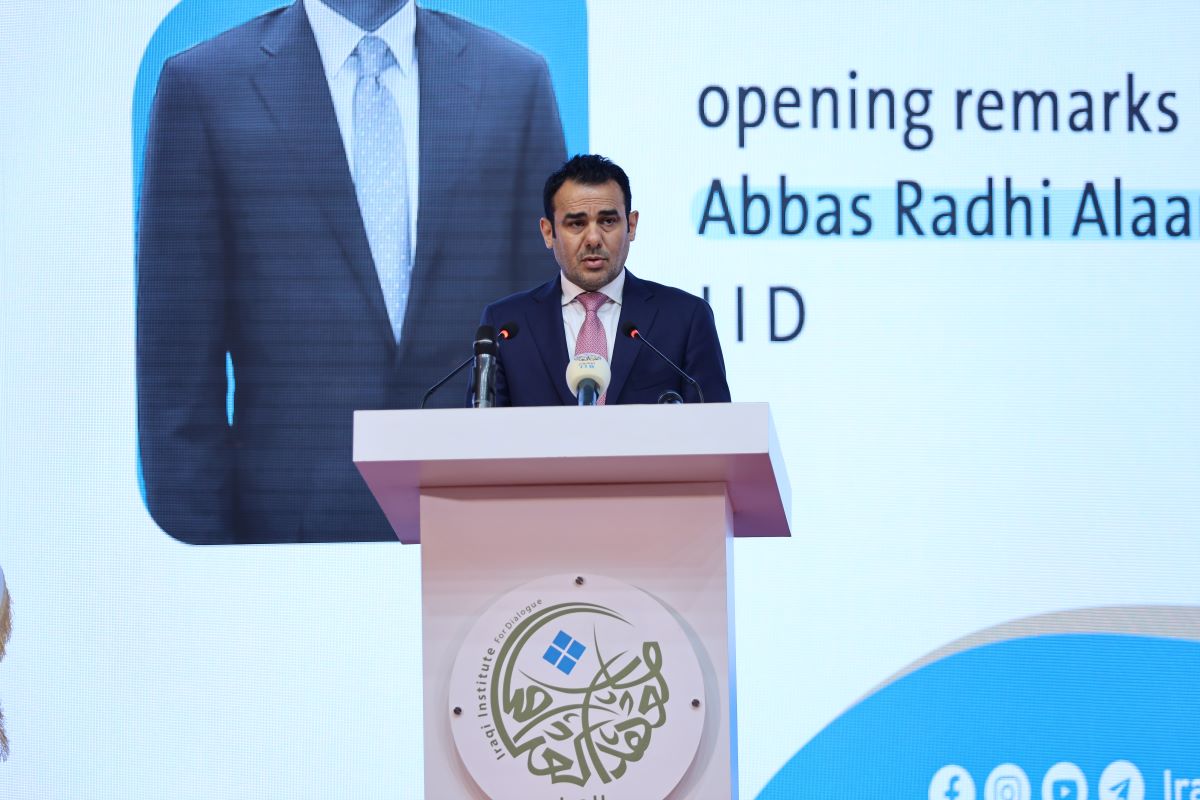
Speech of the Director of the Iraqi Institute for Dialog at the Sixth Baghdad International Dialog Conference

Seventh Baghdad International Dialogue Conference Call for Papers

Comments