


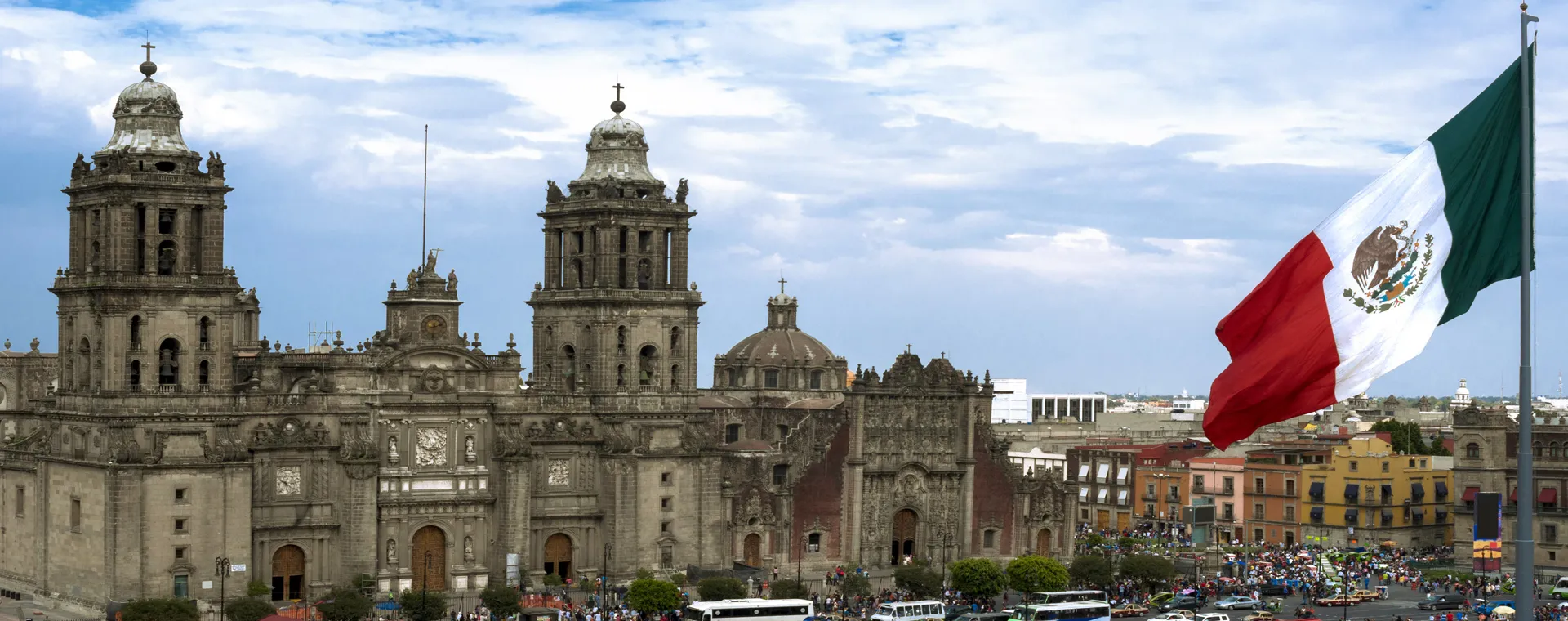
Mexico at the crossroads of Donroe
Mexico is entering a phase in which the United States is no longer negotiating not only interests, but also the perimeter and borders of power. The language of the Monroe Doctrine is important because it rearranges what Washington deems legitimate within its geographical scope. When priority becomes an explicit principle, partners are no longer just partners, but are transformed into variables in a security equation whose results are measured by the degree of compliance and speed of implementation.
This shift is already evident in the Mexican dossier: the problem of drug cartels is being reframed from a common tragedy to a test of state sovereignty. According to this reasoning, the question is no longer whether the United States and Mexico will cooperate, but whether Mexico will accept an operational presence defined by America as the price of access and stability.
Reports that Washington is pushing for U.S. troops or intelligence officers to accompany Mexican units abbreviate the essence of the moment; The request is not symbolic, but touches upon the mandate and powers.
And the Mexican leadership has drawn a clear public line: no foreign military intervention on Mexican territory. This stance is not merely an expression of nationalism, but an institutional necessity. Once operational authority has been ceded, it is very difficult to undo it; The cost of domestic legitimacy is permanent, while security gains remain uncertain and politically employable in Washington. Mexico recognizes that the most precious concessions are those that change precedents.
However, war rhetoric does not need to turn into actual war to be a strategic actor; It's enough to be possible. The US Federal Aviation Administration (FAA)'s warnings about “military activities” over areas linked to Mexico and the wider Pacific corridor serve as a normalization mechanism; it returns markets and public opinion to a backward assumption of military risk, even when the formal relationship remains cooperative. Under the doctrine of hemispherical dominance, the blur itself becomes a tool.
Here, the Mexican crossroads become more acute: Mexico's margin of maneuver is real, but structural rather than showbiz. Industrial integration in North America is not an abstract slogan, but a daily harmony of supply chains, labor, logistics and energy flows. Disabling it would hurt American interests as well, but that doesn't eliminate the threat; It changes the negotiating style and pushes Mexico into a game of rhythm in which credibility is built through technical achievements and institutional performance, while rejecting concessions that transfer power.
And Monroe's principle adds a second layer: the narrative of the external rival. The doctrine's stated goal of preventing competitors from outside the Western Hemisphere from strategically positioning is not confined to Venezuela. It is a lens through which Washington interprets ports, communications, infrastructure, investment, and even regulatory options across the region.
It will put pressure on Mexico not only to fight the guerrillas, but also to prove that its economic modernization does not create a foothold that Washington can call strategic risks. In practice, this may draw industrial policy into the security realm.
Mexico's optimal position in this environment is neither defiance nor appeasement, but "disciplined sovereignty": rapid and measurable cooperation, coupled with a strict red line around operational control. Sharing intelligence, disrupting financial flows, intercepting precursor chemicals, tracing weapons, and extradition can all be framed as sovereign actions that produce common results. What needs to be resisted is the redefinition of Mexican territory as an open operational environment to bring down American power.
The paradox that Mexico has to manage is the paradox of the new moment: what is technical has become political, and what is political is increasingly expressed through technical actions. Washington can demand "concrete action" while at the same time suggesting that only a U.S. presence lends legitimacy to it. Mexico has to respond with the capacity of a state that is visible enough to meet the demand for results, and institutionally fenced enough to maintain power.
At this juncture, the crucial question is not whether Mexico can cooperate, but whether it can institutionalize such cooperation in a way that denies the US the argument that unilateral action is necessary. The Monroe Doctrine is a doctrine of legitimacy, not just of force. And then, Mexico’s response must be a “doctrine of efficiency”: proving that sovereignty is not an obstacle to results, but a condition for sustainable results.
If Mexico succeeds, it will transform geographic proximity into negotiating leverage, maintaining integration without accepting dependency. If it fails, the Western Hemisphere will see a precedent-setting phase in which “temporary” operational exceptions become the new baseline, and the language of partnership masks a quiet erosion of jurisdiction and sovereignty.

The Iraqi Institute for Dialogue, the logistical sponsor of the Baghdad International Book Fair, opens its own pavilion at the fair

The Iraqi Institute for Dialogue publishes "The Diplomatic Portfolio" by Dr. Karrar Al-Badiri

Official agreement between Iraqi Institute for Dialogue and the Iraqi Media Network to sponsor The Seventh Annual International Conference of “Baghdad Dialogue” 2025
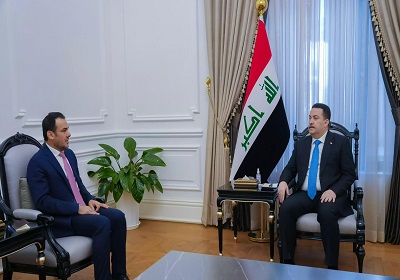
Prime Minister: The path of development will make Iraq a regional political and economic powerhouse

Invitation to the 79th issue of Dialogue of Thought

Seventh Baghdad International Dialogue Conference Call for Papers

Praise for the Baghdad International Dialogue: Strengthening Iraq's pivotal role and a meeting point for visions

Comments