

Syria: Al-Sharaa, the Kurds and the impact of Trump's policy
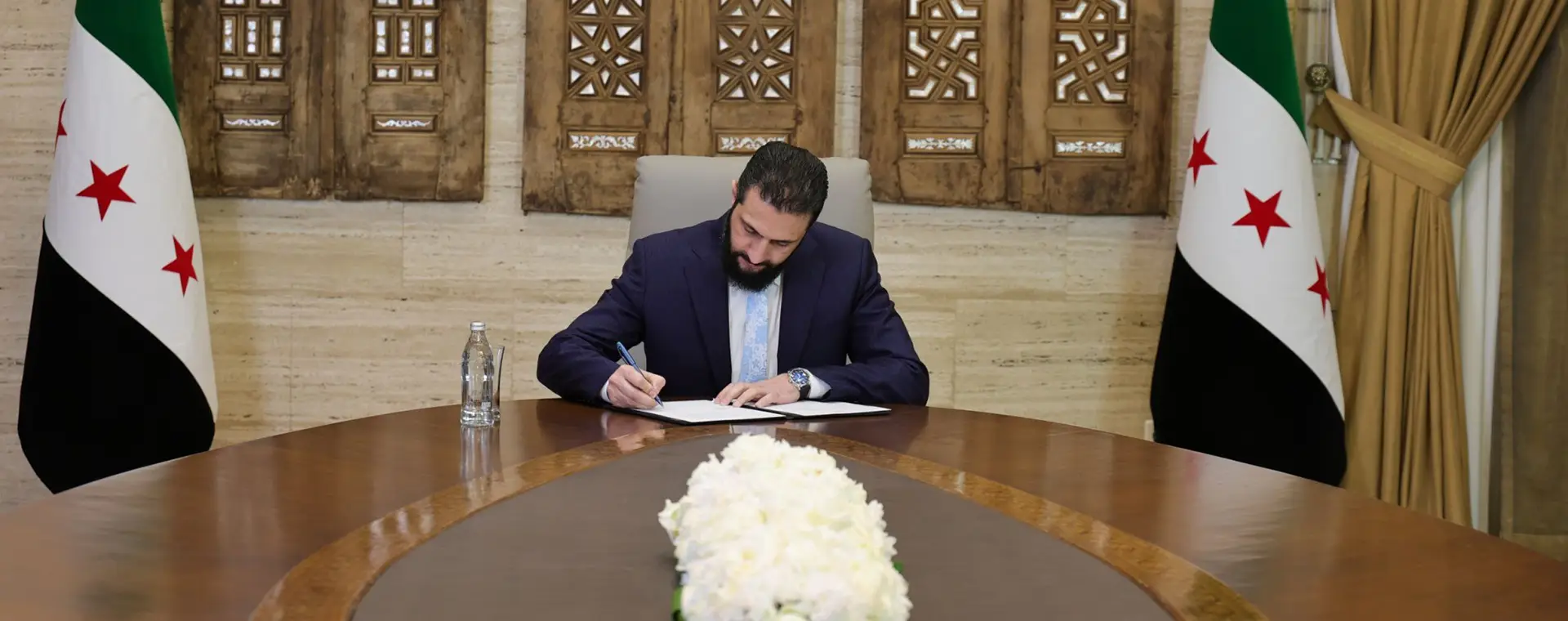
eleven days to take control of Damascus, and twelve days to march from Aleppo to Raqqa. "Interim Syrian President Ahmad al-Sharaa can add to his record a new lightning rod, which in a few days has allowed him to consolidate his grip on the country, whose de facto leader he has been since the fall of Bashar al-Assad in December 2024."
And this has been paid for by the Syrian Democratic Forces (SDF), often referred to in the media – for simplicity – as the “Kurds.” "These formations, which for years managed large swathes of Syrian territory by autonomy, are now heading for dissolution, while their autonomous administrative structures will be under the authority of the central government." And the changing international context, particularly the U.S. position under Donald Trump, has played a crucial role. Washington, which has been the SDF's main backer in the fight against ISIS, has found in al-Sharaa - the former jihadi leader known as Abu Muhammad al-Julani - a new and stable partner in a region that is central to the future of the entire Middle East.
What happened?
After weeks of fighting, which initially led to government forces taking control of Aleppo’s Kurdish neighborhoods of Sheik Maqsoud and Ashrafieh, the two sides — the Syrian government and the SDF — reached an agreement that declared a ceasefire and radically redrew the balance of power in northeast Syria. The agreement provides for the de facto dissolution of SDF, its integration into the regular Syrian army, and the return of most of the territory it has controlled since 2011 to state authority. In many respects, the agreement seems more like a Kurdish surrender than a balanced settlement.
And there is a key element to emphasize: the SDF is numerically and politically dominated by the People's Protection Units (YPG), which is affiliated with the Democratic Union Party (PYD), the Syrian branch of the Kurdistan Workers' Party (PKK), which was founded in Turkey and espouses the ideology of Abdullah Ocalan. And besides, the SDF also includes Arab, Assyrian, Turkmen, and other elements, which explains why calling it "Kurds" is a wrong or at least simplistic description, as the Kurds are an Iranian people distributed among Iran, Iraq, Turkey, Syria, and parts of the Caucasus.
Expected result?
This distinction, though complex, helps to understand how the SDF lost within hours territory it had controlled for years. Alongside the "official" offensive by Damascus forces, a coordinated uprising broke out among some Arab tribes that had long resented SDF rule. In these areas, Kurdish formations have attempted to implement Ocalan's "democratic confederation" model, an anti-state model based on local government, direct democracy, gender equality, and the environment, organized into networks of allied communes rather than a nation-state. "But this model has been seen by large segments of the Sunni Arab population - the majority in northeast Syria - as an externally imposed one, difficult to adapt to the traditional tribal Muslim community that prevails in these areas."
Therefore, it was no coincidence that the residents of Tabqa, Raqqa, and Deir Ezzor greeted the entry of the Damascus forces as "liberation," distorting images of Ocalan and demolishing monuments dedicated to YPG fighters killed in the fight against ISIS. "The success of the operation was also helped by the defection of a number of fighters - most of them Arabs - from the SDF and their voluntary joining the ranks of the Damascus army, although it was difficult to determine their exact numbers." And finally, unlike the Alawites on the Syrian coast and the Druze in Suwayda, the advance of the Shara'a forces has not been accompanied by widespread ethnic-religious massacres or major forced displacement of civilians.
What does the agreement stipulate?
The two sides reached a preliminary understanding in March 2025, after a meeting in Damascus between al-Sharaa and SDF leader Mazloum Abdi, but its implementation has not actually begun. Today, with the balance of power shifting, the SDF has to hand over the Arab-majority provinces of Raqqa and Deir Ezzor, where the Syrian army has already begun to exert control. These areas are strategic not only for their size, but because they include the country's main oil fields, as well as the vital Tishreen and Tabqa dams. The wells will be under full Syrian state control, with no guarantee of revenue sharing, despite SDF demands to do so during last year’s negotiations. The area is also one of the most fertile areas of the country thanks to natural irrigation from the Euphrates River and its tributaries.
In addition to oil, Damascus will regain control of border crossings and essential infrastructure. "The Kurdish local administration, whose final form has yet to be determined, will retain only limited autonomy in Hasakah province, the Kurds' historical stronghold, and even there the governor will be appointed by the central government, sharply curtailing local governance." "Militarily, it rejected Kurdish demands to maintain cohesive units within the army, as fighters would be integrated as individuals." The state will also run detention camps that house thousands of former ISIS fighters and their families, which the SDF has so far guarded.
To mitigate the political impact of the agreement, al-Sharaa issued a decree recognizing some of the cultural and civil rights that Kurds have long demanded. Their language will be recognized as a national (non-official) language and can be taught in schools in predominantly Kurdish areas. Nowruz will also be a national holiday. And most importantly, the Kurds will be granted full Syrian citizenship, including the right to a passport, ending decades of discrimination under the Assad regime.
An American coup?
This scene could not have been imagined without the crucial rapprochement between Syria and the United States under Trump, which culminated in a series of meetings between the two leaders throughout 2025. The main motivation for U.S. support for the SDF, since 2014–2015, has been to defeat ISIS and prevent its return after 2019. With al-Sharaa – whose transformation from an al-Qaeda-linked fighter to a recognized political leader, and even its inclusion in the "international coalition against ISIS" – the United States has found a new reference in the region, making its alliance with the "Kurds" less necessary than it was in the past. The SDF's latest attempt to wave the ISIS detainees' card in hopes of regaining US support has also failed.
And yet, it should be noted that the U.S. special envoy to Syria, Ambassador Tom Barak, has always been clear that the fate of the SDF and its self-administration is integration into the new Syrian regime through negotiation. But Kurdish forces have tried to hold out for a year just to buy time in the hope of gaining outside support (American or even Israeli) that has never materialized. Today, against her will, she finds herself having to sip a bitter glass.
The Iraqi Institute for Dialogue, the logistical sponsor of the Baghdad International Book Fair, opens its own pavilion at the fair
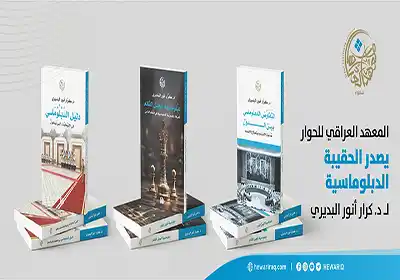
The Iraqi Institute for Dialogue publishes "The Diplomatic Portfolio" by Dr. Karrar Al-Badiri
Official agreement between Iraqi Institute for Dialogue and the Iraqi Media Network to sponsor The Seventh Annual International Conference of “Baghdad Dialogue” 2025
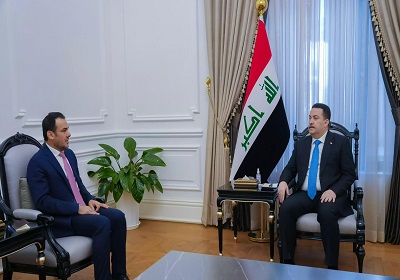
Prime Minister: The path of development will make Iraq a regional political and economic powerhouse
Invitation to the 79th issue of Dialogue of Thought
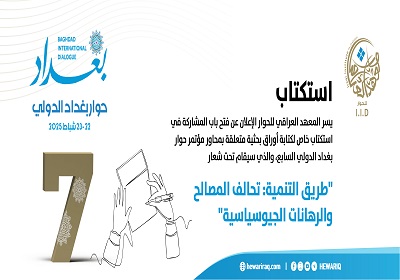
Seventh Baghdad International Dialogue Conference Call for Papers
Praise for the Baghdad International Dialogue: Strengthening Iraq's pivotal role and a meeting point for visions
Comments