


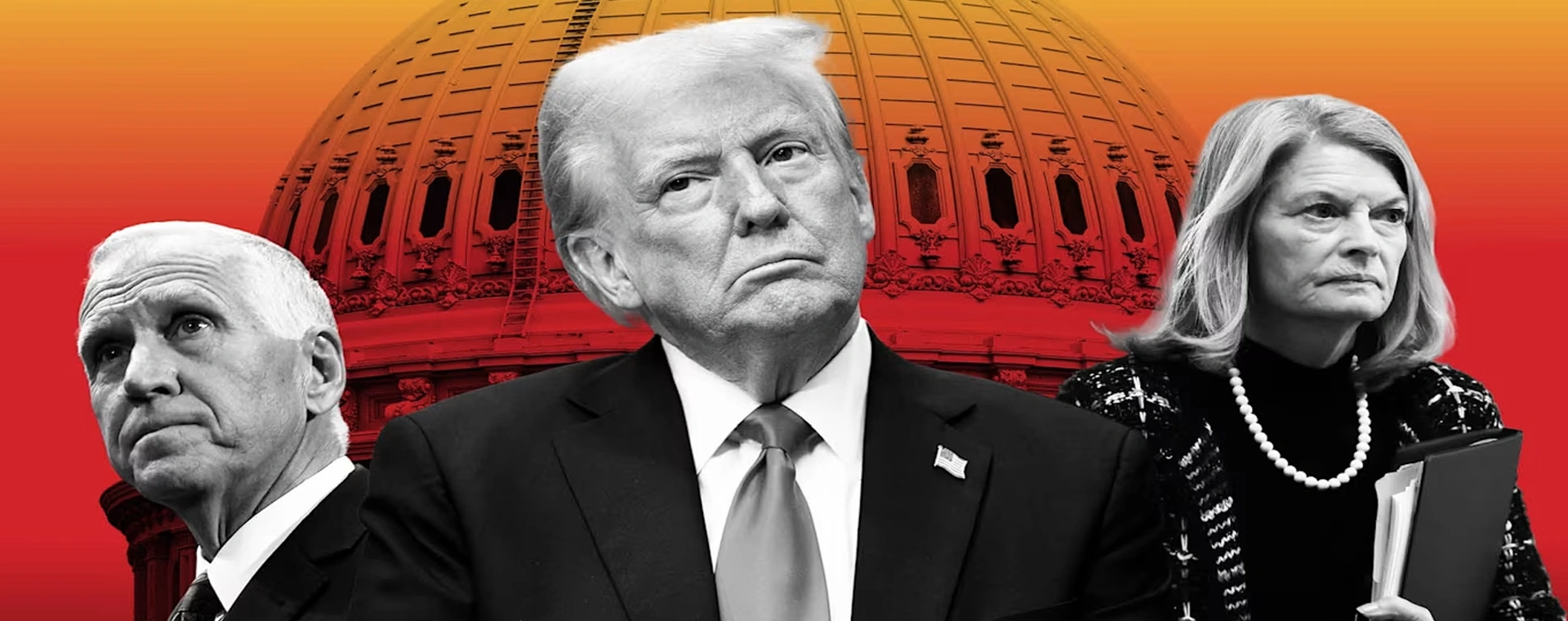
Chagos paradox: What does Trump's return reveal about the nature of contemporary strategic rivalry?
On January 20, 2026, U.S. President Donald Trump backtracked on his administration’s previous support for the British agreement on the Chagos Islands, calling the decision to transfer sovereignty to Mauritius with the re-lease of the Diego Garcia military base an “act of great stupidity” that was done “for no reason whatsoever.”
This intervention was remarkable not only for its sharp tone, but also for its contradiction with the administration's own position a few months ago. Just eight months ago, Secretary of State Marco Rubio called the agreement a “historic achievement” that ensures the long-term operation of a facility of paramount strategic importance.
And Trump went further, explicitly linking the British concessions in Chagos to his argument that the United States should take over Greenland. “The UK’s abandonment of critical territory” is “a new episode in a very long series of national security reasons why the acquisition of Greenland is a must,” he wrote.
And what may seem like a contradiction of positions, in fact, reveals a deeper issue: the coexistence of two incompatible frameworks for understanding strategic rivalry. One prioritizes legal action, procedural legitimacy, and institutional solutions. The other assesses the results in terms of strength, location and long-range systemic advantage.
The Chagos case provides a clear example of why decisions resulting from institutionalized liberal logic, in the eyes of political realists, have emerged as evidence of strategic erosion rather than principled governance.
The logic of the deal
In May 2025, the UK agreed to transfer sovereignty of the Chagos Archipelago to Mauritius, retaining the right to operate the Diego Garcia base under a 99-year lease (Article 13), at an estimated annual cost of £101 million. The base remains the headquarters of a joint British-US military facility that is a hub for projecting power across the Indian Ocean, the Middle East and East Africa.
British officials have portrayed the deal as a solution to a long-running legal dispute while ensuring continued military access. In 2019, the advisory opinion of the International Court of Justice concluded that Britain’s separation of the islands from Mauritius in 1965 violated international law. As legal challenges and diplomatic pressure mounted, the matter was portrayed as a threat to the long-term legal security of al-Qaida. Later, the British government admitted that it had been forced to hand over the islands because the military base had become “threatened” after judicial decisions undermined its position, and explicitly attributed the result to legal restrictions rather than strategic recalculations.
This framework reflects a typical liberal-democratic strategic logic, in which international law is seen as a binding constraint that requires compliance even when strategic positioning is complicated. Historical injustice is understood as something that needs to be addressed regardless of its current ramifications. Procedural legality is assumed as a guarantee of lasting results.
Negotiations with Mauritius are conducted on the basis of formal equality, while ignoring power inequality in the analysis.
doctrinal context
Trump's intervention aligns with the framework outlined in the November 2025 U.S. National Security Strategy. Although debatable, its claims represent a formal doctrine and embody a perception increasingly present in American strategic thinking: that European ruling elites have internalized decision-making frameworks unsuited to competitive international environments.
The strategy warns of a European “cultural erasure,” and argues that the continent could become “unrecognizable in 20 years or less.” She attributes this trajectory not only to external threats, but to elitist governance structures characterized by what she describes as “self-distrust” and producing policies that are disconnected from the reality of power. European strategic decision-making is presented as being constrained by procedural, legal and aversion to power-based thinking.
Within this framework, the Chagos case becomes a typical case, no exception, of how to reshape a strategic position across the legal trajectory, while presenting it as a fixation or guarantee of stability.
Strategic Reality
Mauritius, with a population of about 1.3 million, a GDP of about $12 billion, and little independent military capacity, has little physical leverage to force a major power to give up strategically important territory. The Chagos issue exists as a geopolitical phenomenon because it is integrated into a broader strategic environment.
Over the past decade, Mauritius has deepened its economic and diplomatic ties with China, including its participation in projects linked to the Belt and Road Initiative. These relationships do not imply direct control, but they change Mauritius' strategic choices. In parallel, international legal and institutional forums have become arenas in which major power rivalries are managed indirectly, by building alliances, formulating agendas, and normative pressure rather than hard power.
From this perspective, the Chagos result fits into a broader pattern in which legal and institutional mechanisms are used to reshape strategic environments. Britain has shifted absolute sovereign control to a leasing arrangement that maintains operational access today, but introduces new forms of long-term exposure to risk. Fragility does not lie in the present or in the operation, but in the legal, political and temporal dimension. Sovereignty is elsewhere, and access has come to depend on a continual consensus over decades, in an environment in which external actors have incentives to cultivate influence.
A 99-year lease creates a manifestation of continuity, but it entrenches future negotiating imbalances. What was unconditional control became conditional access, subject to political development, legal challenge and alteration. Not a single bullet was fired; it was localized through structural means.
Clash of Frames
Trump’s reaction is analytically significant, not because of his consistency or diplomatic precision, but because it reflects an instinctive realization that something strategic and irreversible has happened. The contrast between previous diplomatic endorsement and subsequent condemnation suggests a reassessment when the implications are viewed from a power-based perspective.
From this perspective, abandoning existing sovereignty seems irrational. Lease access is intrinsically inferior to sovereign control. The legal track is understood not as neutral arbitration but as a competitive tool. Small states are treated not as abstract peers, but as nodes within broader networks of influence.
British officials, operating within the institutional liberal framework, find it difficult to express this logic without embarrassment. A strategic calculation seems unprincipled, and a power imbalance seems unseemly. Yet, while Britain negotiated with Mauritius as if force no longer regulated the outcome of the international system, others treated the matter as a struggle for position, access and influence.
This division is reminiscent of the logic of the "Milos dialog", when Athens rejected Milos' calls for justice with harsh clarity: the powerful do what they can, and the weak suffer what they must. Institutional liberalism is a constant attempt to transcend this logic through law and procedure. The question posed by the Chagos case is: Is this transgression sustainable when competitors continue to operate within explicit, power-based frameworks?
Civilized reading
The deeper problem is not a moral failure but a cognitive mismatch. Increasingly, liberal democratic elites apply governance frameworks designed for domestic legitimacy to international environments in which adversaries do not share the same assumptions. Restrictions are imposed unilaterally. Procedures are respected even when used as a weapon by others. Legal standards are treated as ends rather than tools.
This results in a recurring pattern: international law restricts liberal democracies while being selectively called upon by rivals. Institutions are respected by some actors and strategically exploited by others. The results presented as tentative, out of the frame, appear to be avoidable losses of position and influence.
What does the case reveal?
The Chagos episode reveals a radical mismatch between strategic frameworks that are now explicitly stated in American doctrine.
The framework treats international law as a binding constraint, procedural legitimacy as a stabilizing factor, historical injustice as a matter of compensation, and institutions as impartial arbitrators. Another framework treats law as a tool, legitimacy as a secondary to the site, oppression as a lever, and institutions as a disputed arena.
The two frameworks coexist within the international system. The problem arises when elites can only express one, and when the other is treated as illegitimate and not just different.
The British agreement may resolve a historical injustice by legal means. And it could simultaneously implant long-term strategic fragility into a vital military structure. These two readings are not contradictory. The difficulty, however, is that liberal-democratic discourse cannot cope with the second reading without feeling like a betrayal of values.
conclusion
Trump’s intervention performs an analytical function regardless of his motives. It exposes the dynamics that institutional liberal discourse tends to obscure, and it aligns with a broader doctrinal shift that has become explicit in U.S. strategic documents.
What is undeniable is that Britain has shifted sovereign control to conditional, paid access, justified the decision with international legal obligations, and presented the outcome as strategic security rather than strategic compromise.
What deserves sustained attention is why power-based thinking has become more difficult to articulate for liberal elites, why official American doctrine describes this as a structural problem, and are frameworks designed for domestic legitimacy still sufficient for long-term strategic competition?
The Chagos affair, in miniature, reveals a clash between those who think of procedure, law and legality, and those who think of power, location, and advantage. Which of the two frameworks would be best kept is an open question. But ignoring the existence of this clash may itself be the fragility that this case exposes.

The Iraqi Institute for Dialogue, the logistical sponsor of the Baghdad International Book Fair, opens its own pavilion at the fair
Official agreement between Iraqi Institute for Dialogue and the Iraqi Media Network to sponsor The Seventh Annual International Conference of “Baghdad Dialogue” 2025

The Iraqi Institute for Dialogue publishes "The Diplomatic Portfolio" by Dr. Karrar Al-Badiri

Invitation to the 79th issue of Dialogue of Thought
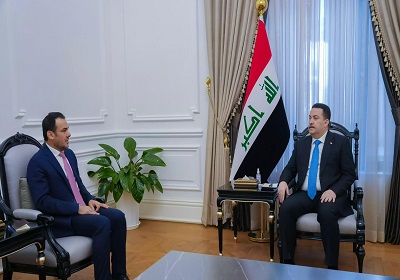
Prime Minister: The path of development will make Iraq a regional political and economic powerhouse
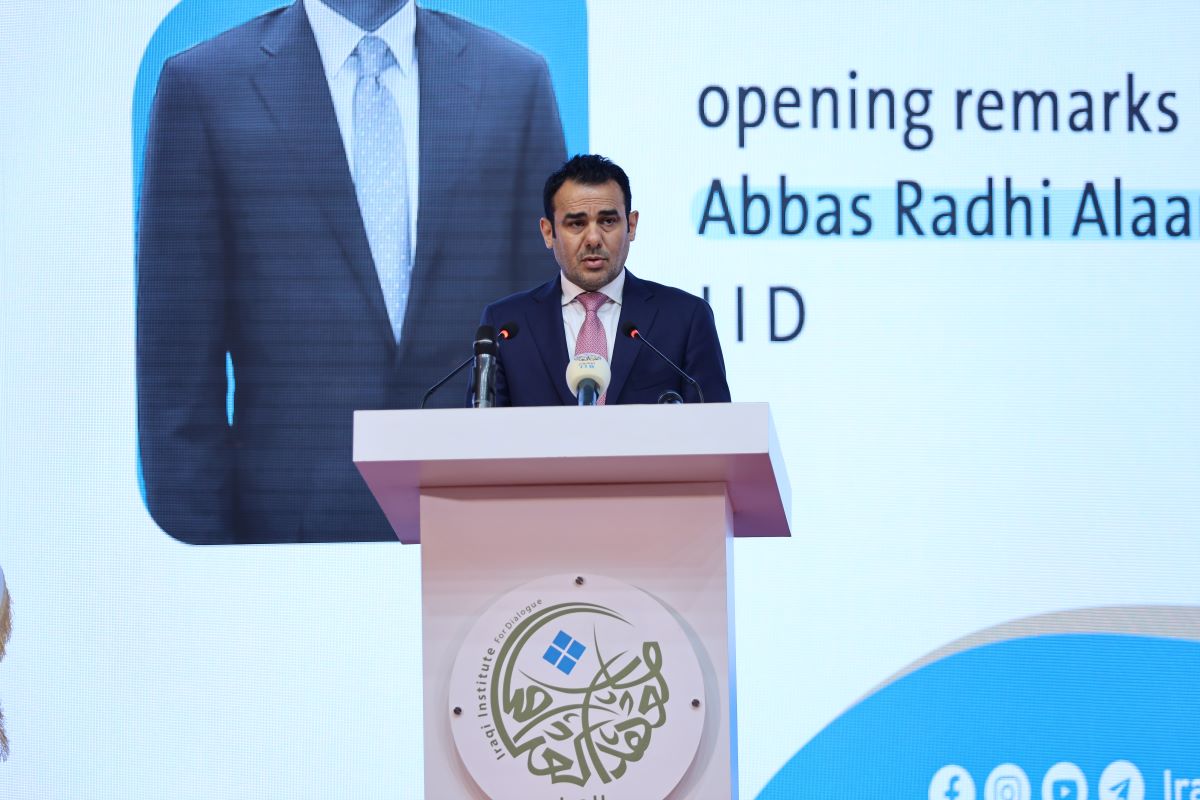
Speech of the Director of the Iraqi Institute for Dialog at the Sixth Baghdad International Dialog Conference
Seventh Baghdad International Dialogue Conference Call for Papers
Comments