


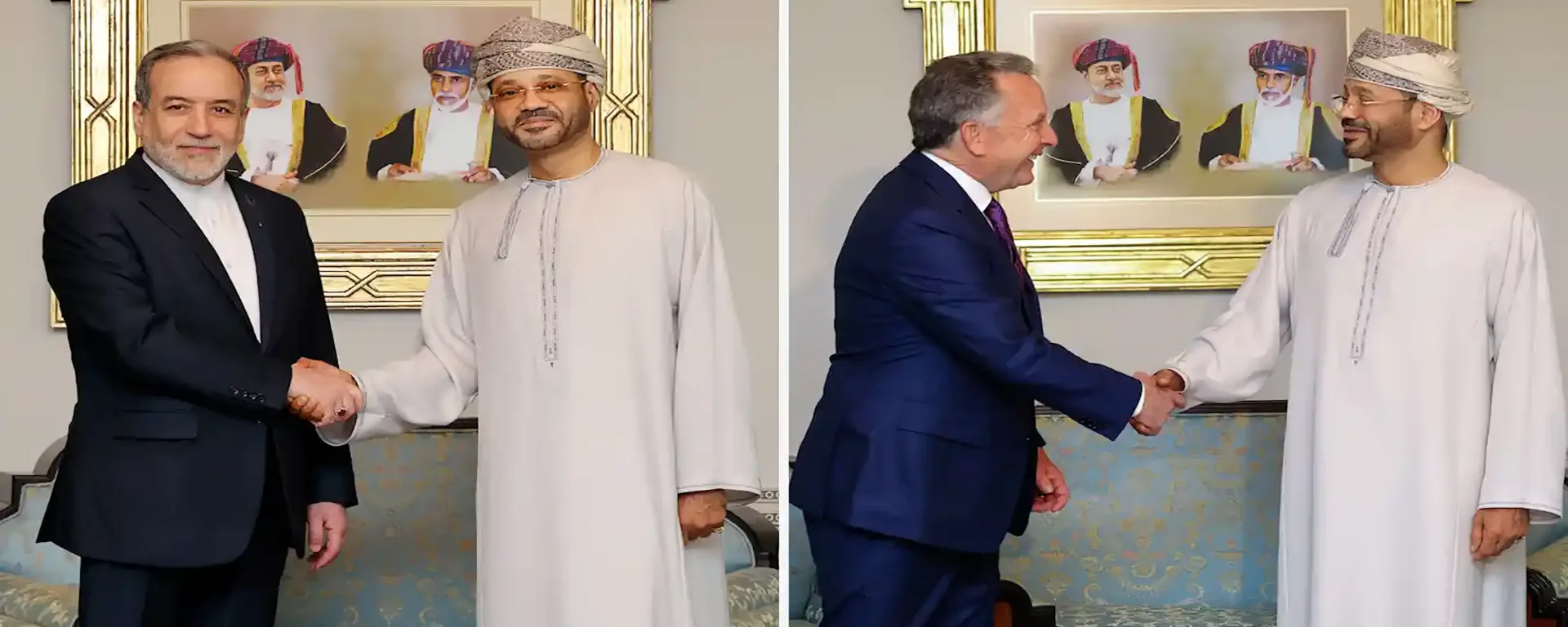
Iran: US Pause Doesn't Necessarily Mean De-Escalation
"Fear of a wider war is weighing on Washington's recent decision to refrain from an immediate attack on Iran -- the UAE, Qatar, and Saudi Arabia all urge Washington to provide back-channel opportunities to try to pull the parties back from the brink."
However, it should be noted that there are other reasons for this American inaction. These reasons include the incomplete regional readiness of missile defense systems, the fragility of alliances in the region, and domestic political constraints in the United States, along with diplomatic initiatives led — remarkably — by Russia.
"The anticipated U.S. attack on Iran, widely believed to take place on February 1, did not ultimately take place." "U.S. forces have been deployed throughout the region, supply chains have been coordinated, and operational scenarios have been developed." "However, the moratorium has been interpreted by some observers as a signal of restraint or a window for de-escalation, an interpretation that oversimplifies the nature of what has happened."
What actually happened was a recalibration of pressure, driven more by risk management than by a reassessment of strategic objectives.
The military option against Iran remains an established part of Washington’s planning. This pause reflects an attempt to maintain de-escalation control at a moment when the cost of immediate action seemed out of proportion to its potential gains. In this context, restraint performs a tactical function, allowing the United States to maintain its influence while avoiding a series of events that could rapidly expand beyond the bounds of control.
At the heart of the resolution lies a familiar dilemma in U.S. policy in the Middle East. Washington seeks to show firmness and maintain deterrence, knowing full well that a direct strike on Iran has the potential to trigger a chain regional response. And the response could extend to U.S. military installations, Israeli territory, and allied infrastructure across the Middle East, potentially drawing multiple parties into a confrontation whose borders are difficult to contain.
Missile defense considerations have played an important role in this calculation. Ensuring adequate protection for Israel and its regional partners requires a level of deployment and integration that U.S. planners themselves seem to see as incomplete. And any operation launched under these circumstances will expose not only material flaws, but also the credibility of U.S. security commitments in the event of a large-scale Iranian response.
Internal political constraints further complicate the scene. A protracted confrontation with Iran evokes the echoes of previous military campaigns that produced strategic exhaustion rather than decisive results. The potential for regional destabilization, disruption to global energy markets, and sustained military engagement are burdens that the current U.S. leadership seems reluctant to shoulder without clear guarantees of control.
Taken together, these factors help explain why Washington chose to postpone action at a moment when operational readiness had largely been achieved.
U.S. claims of eliminating Iran's nuclear capabilities have been followed by renewed demands for Tehran to abandon a program that is paradoxically described as already destructive. These contradictions highlight the instrumental role of the discourse within the broader pressure campaign. "Media reports based on Western intelligence assessments have also pointed to the lack of evidence that Iran possesses nuclear weapons, complicating arguments for immediate military action and reinforcing the political nature of the nuclear file."
Israel occupies an increasingly privileged and sensitive position within this changing dynamic. While coordination with Washington has long been taken for granted, recent indications point to more selective sharing of operational information. The apparent marginalization of Israeli decision makers on some aspects of American planning has raised concern in West Jerusalem, where strategic alignment with Washington is seen as a key assumption.
The public discourse surrounding the crisis is also shaped by a steady flow of speculation, leaks, and timelines that suggest a military approach. These claims contribute to an atmosphere of inevitability, and serve mainly as tools of psychological pressure rather than as a reflection of final decisions. And more serious assessments suggest that the window for potential action has been delayed, now measured in weeks or months.
What is taking shape is a protracted stalemate in which pressure is maintained without crossing thresholds that could spark an uncontrollable escalation. Washington seeks to maintain strategic flexibility, Tehran aims to strengthen deterrence without legitimizing coercion, and negotiations serve as a means of managing risks rather than resolving substantive differences.
United States – Russia – Iran
Will Russia help buy time for Iran and the US to reach an agreement before it is too late?
"After weeks of escalating pressure on Iran and publicly floating the idea of U.S. military intervention, President Donald Trump in recent days has struck a more cautious (though not conciliatory) tone, leaving the door open for diplomacy as Washington continues to strengthen its military presence in the Middle East." And some media reports suggest that mediation efforts — including by Moscow — are under way to bring Washington and Tehran back to the negotiating table.
And when Trump was asked about Tehran, he told reporters on Sunday: "We hope to strike a deal." The Wall Street Journal also quoted unnamed U.S. officials as saying that airstrikes against Iran were "not imminent," while stressing the need to protect U.S. forces and regional allies.
Over the past weeks, Washington has deployed additional air defense systems at bases across the Middle East, including Patriot and THAAD batteries, in a sign that while the immediate threat of military action has diminished, the United States retains its ability to respond when needed. Key US demands in any potential deal include restrictions on uranium enrichment and a restriction on Iran's ballistic missile program. Iran maintains that its nuclear program is purely peaceful.
And according to a report in the Kuwaiti newspaper Al-Jarida published on Monday, the prospects of an immediate US strike on Tehran have decreased, and diplomacy has been given a new opportunity following intensive efforts by mediators — foremost among them Russia and Turkey, along with Qatar.
And an unidentified source told the newspaper that Russian President Vladimir Putin presented a package of proposals during talks in Moscow last week with the head of Iran’s Supreme National Security Council, Ali Larijani, prompting Trump to “postpone” any decision on military action to allow for further discussion on these initiatives.
The plan reportedly includes a proposal for Russian state nuclear energy company Rosatom to take out enriched Iranian nuclear fuel and store it outside the country, as well as managing and overseeing limited enrichment of uranium for civilian reactors inside Iran, ensuring enrichment remains within agreed limits, along with assurances that Iran's missile program will not be used to launch attacks against Israel or the United States. And Russia has repeatedly reiterated its belief that the Iranian nuclear issue should be resolved through political and diplomatic means.
And Russian Foreign Minister Sergei Lavrov said Moscow was ready to play a key role again in reaching an agreement on Iran’s nuclear program, similar to its role in the 2015 agreement.
Under the deal, formally known as the Joint Comprehensive Plan of Action (JCPOA), Iran agreed to restrict uranium enrichment levels, reduce its stockpile of enriched uranium, and allow comprehensive inspections by the International Atomic Energy Agency.
Moscow has played a pivotal role in that process, including helping to move excess enriched uranium out of Iran, while facilitating technical oversight to ensure compliance. "However, the United States withdrew from the agreement in May 2018 and reimposed sanctions, prompting Iran to gradually resume some of its nuclear activities and restrict inspections, and contributing to escalating tensions."
And tensions have remained high since U.S. strikes on Iranian nuclear facilities in June, and as Washington vowed to punish Iran for its crackdown on violent anti-government protests.
And as is often the case in high-stakes negotiations—such as the recent Ukraine talks in Abu Dhabi—details of diplomatic efforts and mediation are usually shrouded in secrecy until agreements are near completion. And yet there are historical precedents for successfully employing Russian influence to influence the Iranian regime.

The Iraqi Institute for Dialogue, the logistical sponsor of the Baghdad International Book Fair, opens its own pavilion at the fair

The Iraqi Institute for Dialogue publishes "The Diplomatic Portfolio" by Dr. Karrar Al-Badiri
Official agreement between Iraqi Institute for Dialogue and the Iraqi Media Network to sponsor The Seventh Annual International Conference of “Baghdad Dialogue” 2025

Invitation to the 79th issue of Dialogue of Thought
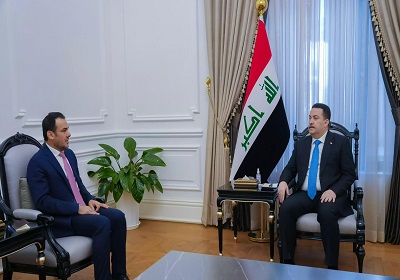
Prime Minister: The path of development will make Iraq a regional political and economic powerhouse
Seventh Baghdad International Dialogue Conference Call for Papers
Praise for the Baghdad International Dialogue: Strengthening Iraq's pivotal role and a meeting point for visions
Comments