


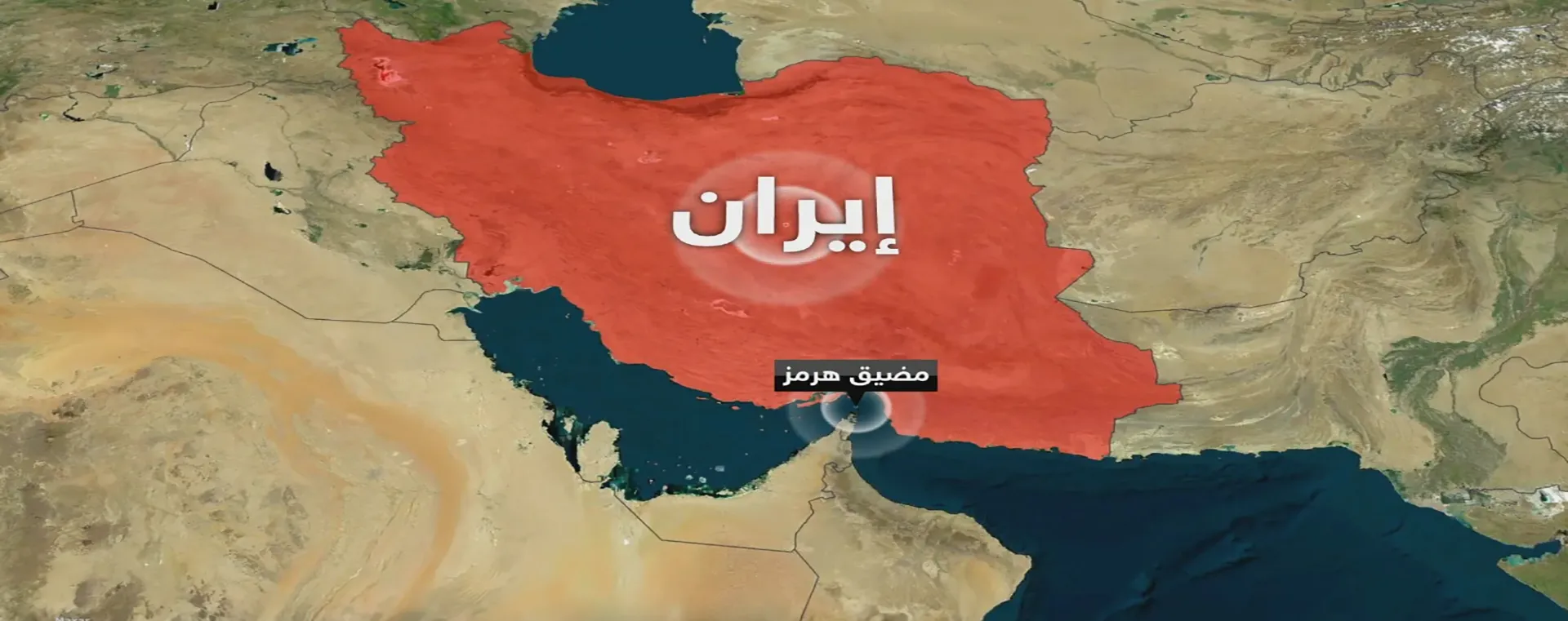
Donald Trump’s blockade of the Strait of Hormuz is a dangerous gamble
When America and Israel began their war on February 28, many expected Iran to close the Strait of Hormuz to shipping traffic. But few expected Donald Trump, less than two months later, to impose his own blockade, targeting traffic to and from Iranian ports and coastal areas. The blockade went into effect on 13 April. Trump hopes the economic tightening will force Iran to open the strait where the bombs failed. It is a gamble that could exacerbate the global energy crisis and lead to a new escalation.
The American logic is simple: Iranian threats have drastically reduced the movement of oil tankers through Hormuz. But Iran has continued to export its oil, albeit in smaller quantities. It also allowed some ships to pass for a fee. Trump’s message is: If neutral shipments can’t go unimpeded, Iranian shipments won’t, either. Mark Montgomery, a retired Marine major general, says the military aspect of the plan is "quite possible." "It is not necessary to blockade every ship, it is enough to blockade enough to deliver the message," he adds.
Warning of oil pressure
The economic and political aspects are more complex. "Most likely, the goal is to cut Iran's economic lifeline and force the regime to make concessions in peace talks, particularly regarding its nuclear program." In theory, Iran is in a fragile situation. Given its current crude oil inventory levels, it may be forced to cut production within 10 to 20 days of a full and effective blockade, according to estimates by Ernst Senser of data analysis firm Fortexa. "With the collapse of Iran's oil exports, there will be insufficient liquidity to import, leading to the collapse of economic activity, the currency entering a downward spiral of devaluation, and the emergence of hyperinflation," says Robin Brooks of the Brookings Institution, a US think tank. "I have no doubt that this will force the clergy to the negotiating table in good faith."
Others are less concerned. Esfandiar Batmanghelidjh, chief executive of Bursa and Bazaar, a think tank, says Iran had assumed its oil exports would be disrupted. And it can withstand six months of pressure by printing money, selling about 100 million barrels of oil stored floating off the coasts of Malaysia and China, and taking informal loans from import suppliers.
This raises two key questions. The first is the impact on energy markets, including in America. "The loss of Iranian production alone is not catastrophic, but it exacerbates the problem of the massive quantities of Gulf supplies besieged by the near-total closure of the strait." And with the fragility of the ceasefire, Iran has little incentive to reopen the strait, thereby resuming attacks on neutral vessels.
Importers will be forced to withdraw their already limited stocks, which could push Brent crude futures prices around $150 a barrel by the end of April. "Given the risk of Iranian attacks on production facilities, pipelines, and ports in the Gulf, as well as the possibility of attacks by Iranian Houthi allies on Red Sea shipping in Yemen, this measure is unlikely to hold for a few weeks without triggering another price spike."
The second issue is to identify States that might be trapped. For example, India has denied paying any transit fees for its ships, which President Trump said on April 12 would be grounds for the ban. But on the same day, U.S. Central Command announced that the blockade would be impartially imposed — a requirement of international law — on the ships of all nations that had crossed Iranian ports or coastal waters.
This includes Indian ships. Oil bound for China, Pakistan and Thailand was also transported from the Strait of Hormuz in the days following the ceasefire. And before that, France and Turkey, two U.S. allies, had allowed their ships to pass, apparently with Iranian consent. America may only need to inspect a few ships to deter others from trying to break out of the blockade. But even that may anger some friendly countries. Some U.S. officials believe China will not object to the blockade, but accepting it would set a dangerous precedent. China has long been deeply concerned about a blockade around the Strait of Malacca in the event of a war in the Pacific.
Mr. Trump’s decision to impose the blockade, which came after he traded the idea of “joint” control of the Strait of Hormuz with the Iranian regime, a practice that would violate international law governing these waterways, suggests that the principle of freedom of navigation is under enormous pressure. Kevin Rowlands, who ran the Royal Navy's research center until last year and is currently editor of RUSI, a military magazine, concludes that this decision "represents another fatal blow to any claim of a rules-based system or international law."

The Iraqi Institute for Dialogue, the logistical sponsor of the Baghdad International Book Fair, opens its own pavilion at the fair

The Iraqi Institute for Dialogue publishes "The Diplomatic Portfolio" by Dr. Karrar Al-Badiri
Official agreement between Iraqi Institute for Dialogue and the Iraqi Media Network to sponsor The Seventh Annual International Conference of “Baghdad Dialogue” 2025
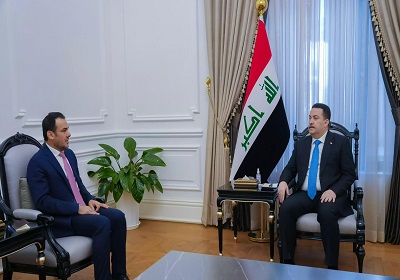
Prime Minister: The path of development will make Iraq a regional political and economic powerhouse

Invitation to the 79th issue of Dialogue of Thought
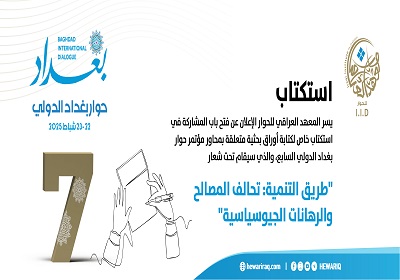
Seventh Baghdad International Dialogue Conference Call for Papers

Praise for the Baghdad International Dialogue: Strengthening Iraq's pivotal role and a meeting point for visions
Comments