


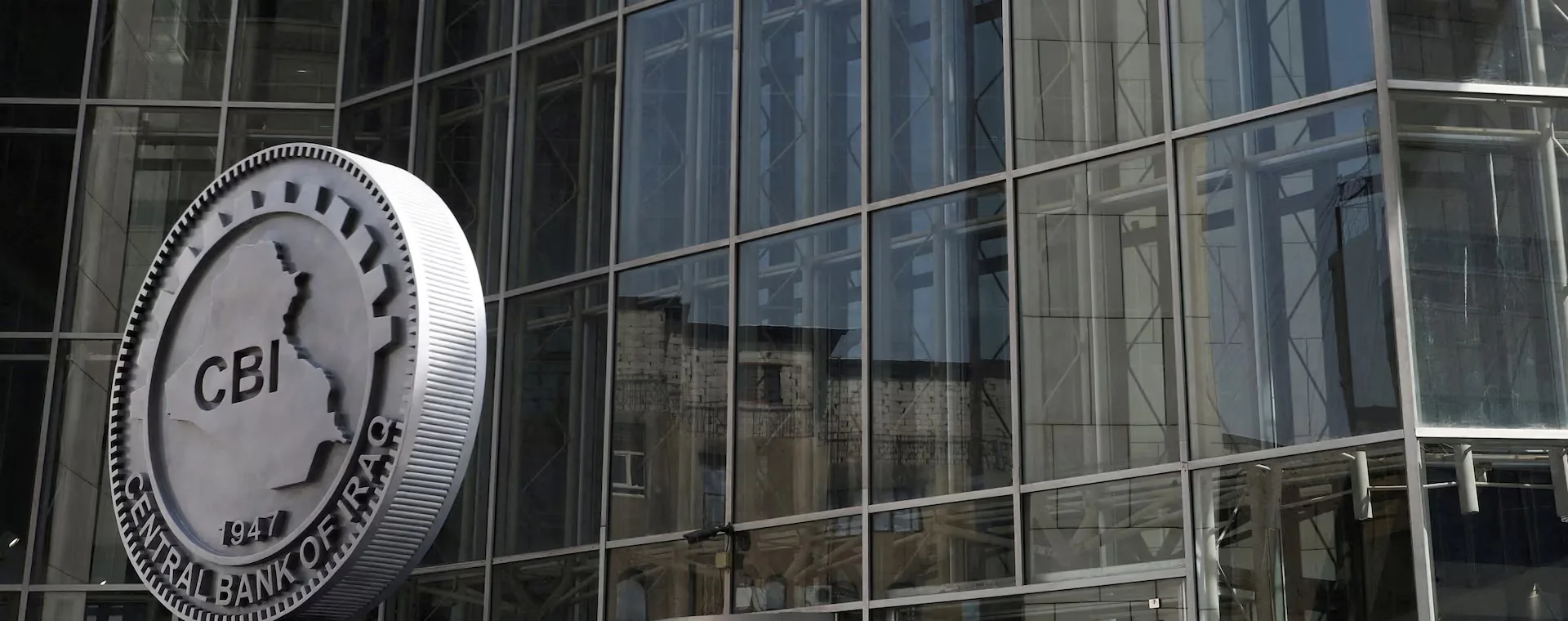
The Geopolitics of Monetary Dependence and the Impact of U.S. Financial Restrictions on Iraqi Sovereignty

Introduction
Since 2003, Iraqi funds have not only been numbered in bank accounts, but have become a lifeline through the New York Fed refinery. Sales of "black gold" originating from Basra's sidewalks do not end up in Baghdad's coffers, but rather settle in the heart of Manhattan, where they are subject to tight control and procedures that leave little room for political or economic maneuver. This financial arrangement, born of the decisions of the Security Council and American executive orders, gave international investment and financial institutions overwhelming influence in guiding the paths of the Iraqi economy, making the "dream of financial sovereignty" hostage to the agreements of geopolitical interests and the dictates of major monetary institutions .
This paper seeks to analyze the dimensions of this dependence, and how the structural dominance of the US Federal Reserve, supported by the policies of the International Monetary Fund and the World Bank, contributes to engineering the financial path of Iraq and determining its development options.
First: The structural roots of financial guardianship and the logic of restricted protection
The reality of Iraqi funds today cannot be read without a return to the moment of establishment in 2003, when Security Council resolution 1483 drew the first features of the mandatory deposit system, this decision required the deposit of all revenues from the export of oil and gas in a special account called (Development Fund for Iraq) with the US Federal Bank, and the declared purpose was to protect these funds from compensation claims resulting from the policies of the former regime, as this was followed by the issuance of US Executive Order No. 13303 issued by the former US President (George W. Bush), which granted these funds comprehensive legal immunity against any seizure or confiscation in the US courts, a procedure that has been renewed annually by successive US presidents until the present time, and although this system provided Iraq (legal shield) at a critical stage, it established a state of absolute financial dependence. The survival of the money in Manhattan means that the country's primary financial resource, which constitutes more than 90% of the budget, falls under the microscope of continuous external oversight, which gives the US administration and international organizations a superior ability to guide Iraqi political decision through the financial portal.
Second: Engineering the Iraqi economy through the dictates of the Fund and the World Bank
Since 2004, Iraq has been obliged to engage in a series of agreements with the International Monetary Fund and the World Bank, such as the Support Agreement and the Post-Conflict Assistance Programs. These agreements represented the "ready recipe" for reshaping the Iraqi economy according to the liberal-capitalist perspective. These institutions stipulated the implementation of harsh reforms in exchange for scheduling foreign debt within the Paris Club, which included lifting subsidies on oil products, reducing government spending, privatizing public sector institutions, and amending investment laws to suit the interests of major financial monopolies.
This political-economic influence turned Iraq into an arena for applying open market theories without taking into account the specificity of the local environment exhausted by wars. Instead of directing Iraqi funds deposited abroad towards building a national productive base in industry and agriculture, the financial decision was employed to strengthen the confidence of international creditors, which deepened the crisis of the single rentier economy and made the Iraqi budget hostage to the recommendations of these international players who put the stability of the global financial system above local development considerations.
Third: The dynamics of geopolitical control and the use of the dollar as a soft weapon
The impact of the influence of the US Treasury and the Federal Reserve is manifested in the ability to employ hard currency flows as a direct tool of geopolitical pressure, as the money path from New York to Baghdad passes through a precise refinery aimed at rationing Iraq's access to its cash balances under the pretext of combating money laundering and terrorist financing, this influence was clearly demonstrated in the measures that included imposing sanctions on dozens of Iraqi banks and ending the traditional currency auction system and replacing it with the electronic platform, this platform was not just a regulatory measure but a tool to ensure that the dollar does not reach sanctioned neighboring countries such as Iran and Syria, Controlling the money routes aims to crowd out regional economic influence and ensure that Iraq remains within the US security and political orbit, Any delay in approving cash dollar shipments that arrive by air with an average of 250 to 50 million dollars per shipment may lead to the government's inability to meet its obligations towards millions of employees, thus putting social and security stability at permanent risk, thus turning Iraqi funds with the Federal Reserve into a mechanism to guide Iraqi political positions The independence of the Iraqi financial decision makes it a dream colliding with the reality of American dominance over the SWIFT system and global cash flows.
Fourth: The influence of global asset management companies and the impact of financial market manipulation
It is not possible to understand the direction of Iraqi funds without realizing the role of global asset management companies that control international financial markets, these giant institutions that manage liquidity estimated in trillions, indirectly affect the decisions of the Federal Reserve and international organizations, when Iraq's reserves that have exceeded the barrier of $100 billion are invested in US Treasury bonds or other international assets, they become part of the global liquidity bloc driven by these companies, as the geographical and qualitative distribution of Iraqi reserves is affected by the recommendations of those institutions, which exposes the national wealth to the volatility of global markets and the risks of economic sanctions, as the gradual shift since 2016 towards diversifying depository places in France, Britain and China, where the percentage outside the United States reached about 64%, represents an Iraqi attempt to escape from US centralization, but at the same time increases Iraq's sensitivity to any punitive measures that may isolate it from the global financial system, as asset management companies contribute to the centralization of the dollar in oil trade, which aborts any Iraqi attempt to deal in local currencies, and keeps financial trajectories under close surveillance of Wall Street's financial giants.
Fifth: The distorted investment environment and the confidence gap in the banking system
The influence of international institutions has contributed to creating a distorted investment environment in Iraq, where international companies look very carefully at a banking system that falls under the guillotine of ongoing sanctions, as the confinement of most foreign investments in the extractive oil sector is the result of the policies of international institutions that focused on transforming Iraq into a reservoir of energy and a consumer of global goods, as the Iraqi funds deposited in the Federal Reserve remain inactive in the performance of their development role, as they invest in bonds with minimal benefits that serve the US economy more than serve Iraq, at the same time the local private sector faces what is known as (financial overcrowding), where the imposed financial policies and total dependence on the dollar coming from New York weaken the ability of local banks to finance productive projects, This contradiction between international rhetoric calling for openness and practices that restrict the freedom of disposition of funds created a large gap that made Iraq an arena for short-term contracting rather than long-term strategic investments, which impedes the country's transition towards the real market economy.
Sixth: The social and economic repercussions of financial dependence
When international institutions impose austerity policies to ensure debt repayment, it is the fragile groups that pay the price through the erosion of purchasing power and the rise in commodity prices, as the fluctuations of the dinar exchange rate associated with the actions of the Federal Reserve and the US Treasury led to successive inflationary shocks, which deepened poverty and unemployment, and thus the influence of international institutions shifts from the framework of (technical support) to a social burden that depends on the country's wealth and the future of its generations to serve the stability of a global financial system that sees in Iraq only a cheap source of energy and a huge bank account, as the absence of unified political will and the spread of corruption at home gave these international institutions the legal justification to continue to impose trusteeship under the pretext of protecting money from waste or smuggling .
Diversifying Monetary Reserves (A Strategy for Maneuvering and Emancipation)
In recent years, Iraq has begun to realize the danger of the total dependence of the US Federal Bank, which prompted it to seek to adopt a policy of diversifying monetary reserves, as the distribution of balances between the euro, gold and other currencies and depositing them in multiple central banks outside the United States represents a step towards reducing the risks associated with the dollar, however, this maneuver remains limited in effect as long as oil revenues are priced and sold exclusively in dollars. Real liberalization requires building a national consensus on the priority of financial independence and the formation of alternative economic alliances with emerging powers such as China and the European Union, as the use of international platforms to demand the end of financial trusteeship, especially after the payment of all compensation to Kuwait and Iraq's exit from the provisions of Chapter VII of the Charter of the United Nations has become an urgent necessity, but sovereignty is not granted by paper decisions but rather adopted by strengthening local financial institutions and adopting modern control technology to combat corruption to cut off the international arguments that justify the continuation of trusteeship.
Conclusion
In conclusion, the impact of dependence and the political-economic influence of the United States of America in directing the paths of Iraqi funds represents the greatest challenge to the independence of the state in our time, international protection has turned into a structural guardianship system that extends from the corridors of the United Nations to the accounts of the Federal Reserve in New York, through the programs of the International Monetary Fund and the World Bank, as restoring financial sovereignty requires a comprehensive national project that begins with reforming the interior by breaking the vicious cycle of the rentier economy, automating the banking system and creating a real sovereign fund that invests oil surpluses in strategic development projects away from the vagaries of American policy, as the real test for the Iraqi state lies in its ability to balance its need for international legal protection with its desire to restore its sovereign financial decision, as sovereignty begins with owning wealth and is completed freely to act in the interest of the Iraqi people, and ensuring that the country's capabilities do not remain mere numbers in the Manhattan Manhattan notebook used to guide the state's paths of the state according to the state's paths of the state according to serve the agendless forces that serve the world's financial system. But it is the only path to guarantee the dignity of Iraqis and the real independence of their country .
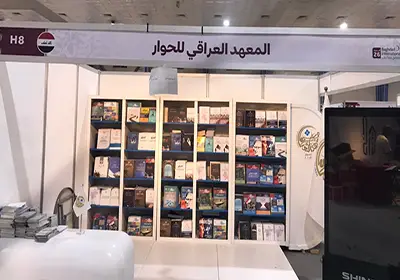
The Iraqi Institute for Dialogue, the logistical sponsor of the Baghdad International Book Fair, opens its own pavilion at the fair
Official agreement between Iraqi Institute for Dialogue and the Iraqi Media Network to sponsor The Seventh Annual International Conference of “Baghdad Dialogue” 2025
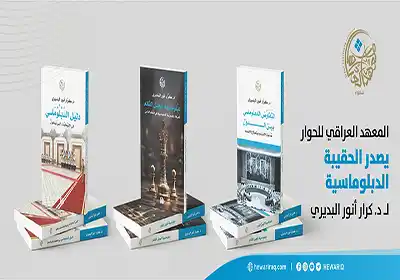
The Iraqi Institute for Dialogue publishes "The Diplomatic Portfolio" by Dr. Karrar Al-Badiri
Invitation to the 79th issue of Dialogue of Thought
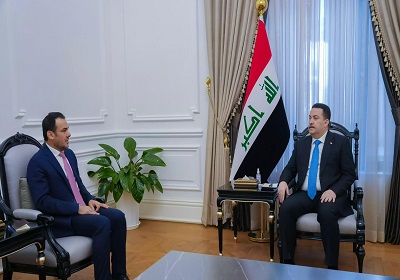
Prime Minister: The path of development will make Iraq a regional political and economic powerhouse
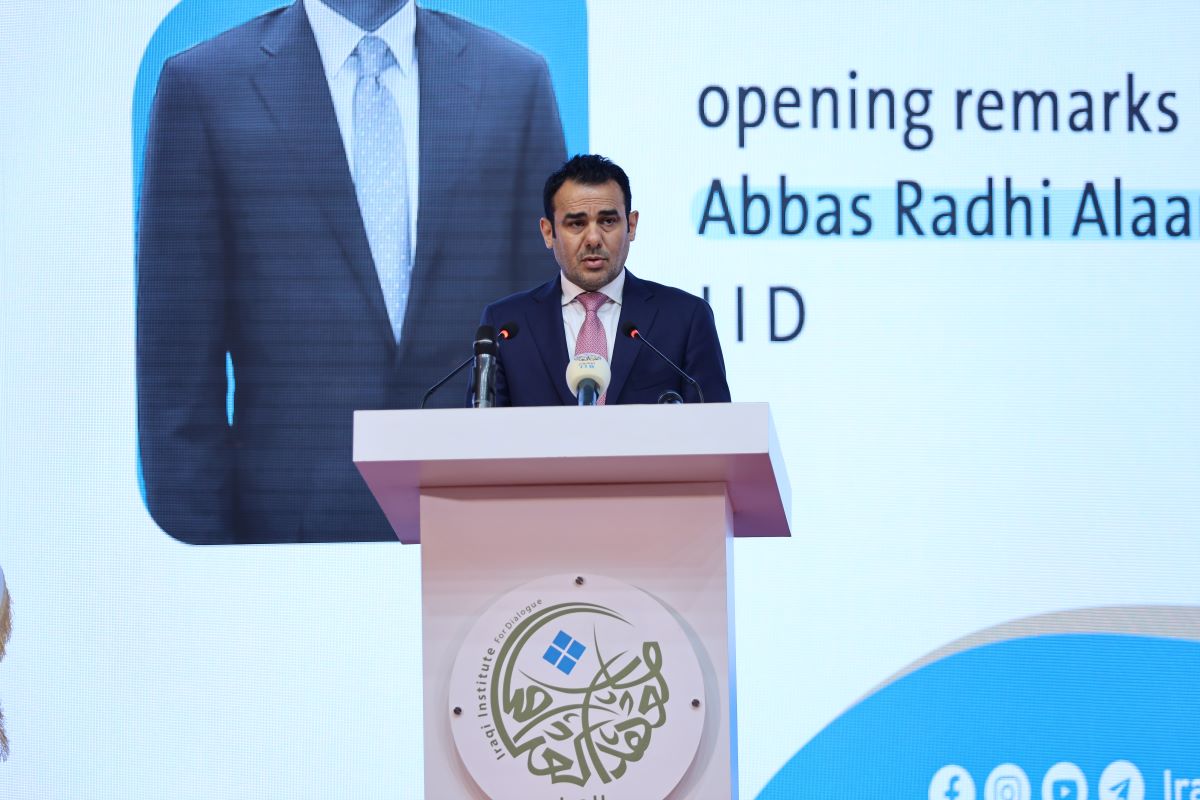
Speech of the Director of the Iraqi Institute for Dialog at the Sixth Baghdad International Dialog Conference
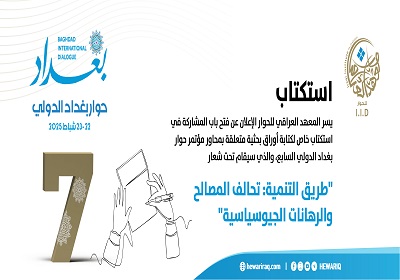
Seventh Baghdad International Dialogue Conference Call for Papers
Comments