


Trump and the "boredom" wars: the impact of political fatigue on the continuation of the war against Iran
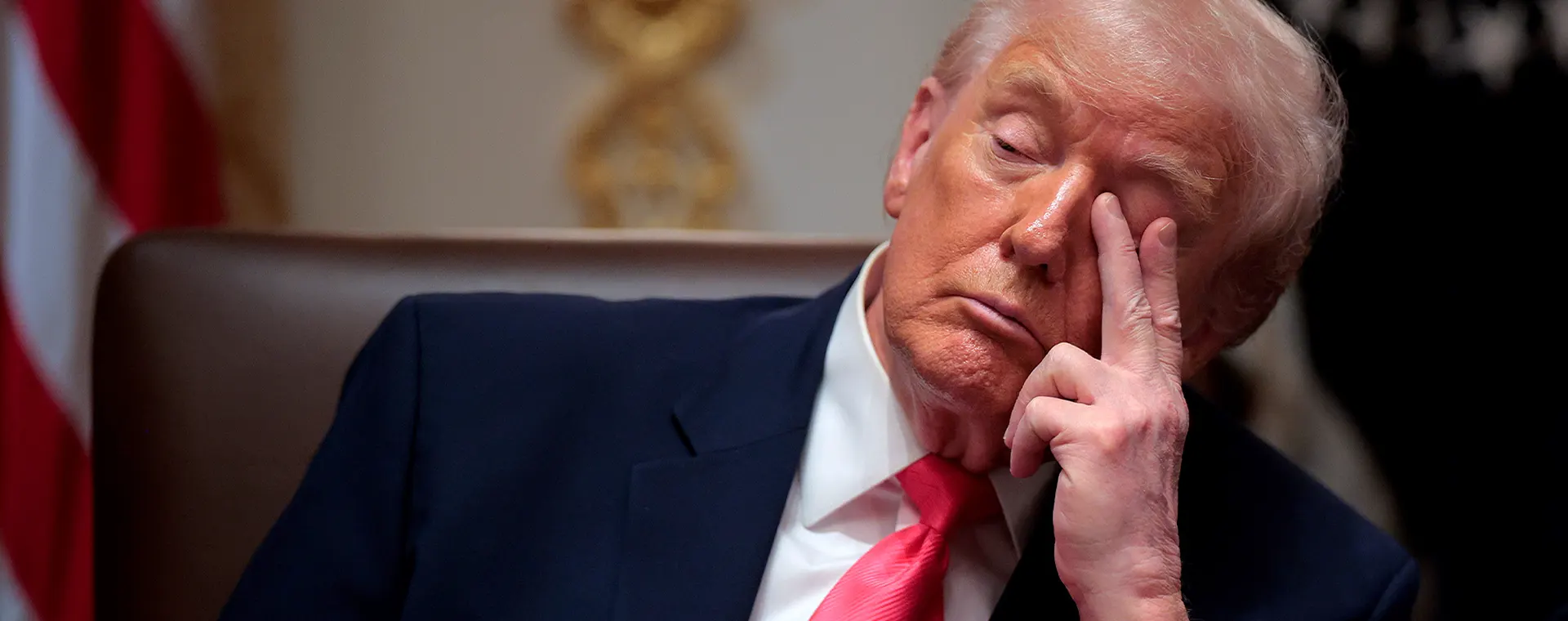
President Trump really, very much wants to end the war with Iran. He has declared victory many times, including about three weeks ago when Iran briefly reopened the Strait of Hormuz. "It has repeatedly extended ceasefire deadlines rather than implementing its (at times disastrous) threats to resume hostilities." And this week, his administration abruptly abandoned efforts to escort ships across the strait, in part because of fear that it could lead to violent and escalating confrontations.
Trump is tired of the war, which has proven much harder and lasted longer than he expected. His party is cautiously watching rising gasoline prices and falling poll numbers. He does not want to be mired in a Middle East conflict like some of his predecessors did, nor does he want the war to disrupt his high-level summit next week in China; He's ready to move on.
But Iran does not seem to want this war to end, or at least not with any acceptable outcome for U.S. negotiators. Trump is in trouble; Five outside aides and advisers told me that the president is convinced that he can “market” any kind of agreement as a victory. But, at least for now, the man who wrote The Art of the Deal cannot even bring Iran to the negotiating table. And today, Washington is still waiting for Iran’s response to the latest offer: a one-page memorandum of understanding that is more an extension of the ceasefire than a treaty to end the conflict.
Trump is faced with a perplexing question: How do you end a war when your opponent isn’t budging? And while Trump is looking for a way out, hardliners in Tehran have used the war to consolidate their grip on power. Iran seems fully intent on achieving something it has historically excelled at: insulting a U.S. president.
Trump never expected things to end like this. After the impressive military operation to wrest Nicolás Maduro from Caracas, the president turned his attention to Iran, telling those close to him it would be “another Venezuela,” two outside advisers who spoke on condition of anonymity told me. Trump believed the U.S. military was invincible and had a chance to overthrow the Tehran regime, a hunt that eluded his predecessors. He was remapping the world and expecting a victory within days, or two weeks at most.
The initial U.S.-Israeli attack killed Iran’s supreme leader and involved waves of bombardment that were said to have destroyed much of the country’s missile capabilities. But Tehran did not give up, instead attacking its neighbors in the Persian Gulf and controlling the Strait of Hormuz, through which 20% of the world's oil passes.
Using a combination of mines, small attack boats and drones, Iran effectively closed the waterway, energy prices jumped, the conflict settled into a stalemate and then a fragile ceasefire. A high-level official round of negotiations has failed, and no further rounds have been scheduled.
On the face of it, Trump has only shown confidence; Sometimes he downplays the war as a “short walk,” a “derailment,” or a “mini-war.” Almost every day, he proclaims an imminent victory, a boast echoed by Defense Secretary Pete Hegseth in his Pentagon briefings. "Behind closed doors, a less strident tone emerges, but U.S. officials believe the naval blockade of Iranian ports, imposed last month, is paying off and choking the country's economy." Two officials predicted that Iran, faced with collapse, would be forced to negotiate.
But the real question is timing: a number of experts have predicted that Iran can withstand the pressure of the blockade for months, not weeks. And a U.S. intelligence assessment delivered to policymakers this week agrees, suggesting Iran could hold out for at least another three or four months. If so, and Iran continues to close the strait, prices will continue to rise in the West, including the United States, during the year of the mid-term elections.
Patience is not Trump’s strength. One outside adviser with whom he talks regularly told me that the president is “tired” of war. Others believe he is frustrated by Iran's intransigence. And while Trump sometimes feels detached from his party’s political concerns, Republicans have been mired in complaints about rising prices, especially at gas stations. Many in the Republican Party were already preparing to lose the House; They believe that the longer the war goes on, the more likely it is that the Senate will also lose.
Despite the negotiating impasse, Trump is reluctant to resume hostilities, aides told me. There is concern about dwindling supplies of U.S. munitions, and Trump this week expressed reluctance to kill more people. Some U.S. allies in the region have also expressed concern that the resumption of U.S. attacks will make them, once again, targets of Iranian backlash. Yesterday, Iran opened fire on U.S. naval vessels in the Strait of Hormuz, and the United States responded by striking positions in Iran.
And despite the violent outburst, Trump insisted that the ceasefire was still holding, downplaying the strikes as a “love tap.” Advisers have indicated that he wants to cool any military action ahead of his trip to Beijing next week to meet with Chinese President Xi Jinping; China has expressed displeasure with the war and the closure of the strait, and Trump wants to claim that the fighting is ending as he seeks new trade deals with Xi.
An additional complication is that the United States has largely exhausted its list of important military targets. And to keep escalating — Trump’s favorite movement — he has had to threaten civilian targets such as power plants, bridges and even desalination plants. At one point, he threatened that “an entire civilization would die tonight,” an explicit threat of war crimes. Trump also has options for a limited ground invasion — such as capturing highly enriched uranium or attacking a breakaway island — but has warned against risking the lives of U.S. troops.
And so Trump continues to issue deadlines to force Iran into submission, but Tehran continues to expose his bluff. For weeks, Trump has boasted about resuming attacks, but each time he finds a way to back down. With the exception of a few hawkish voices, most of those around Trump remain reluctant to resume the offensive even as the stalemate continues. As the naval blockade continues to counter Iran's closure of the strait, the administration on Monday unveiled the "Freedom Project," in which the U.S. Navy deployed to help some ships escape the waterway.
And despite the success of a few ships in transit on the first day, Trump was quick to abandon the plan after Iranian forces fired on a South Korean cargo ship and clashed with U.S. warships, and the Pentagon said it destroyed seven small Iranian boats. But administration officials did not want to risk a major escalation, particularly the possibility of a U.S. naval vessel being targeted. Some Gulf allies, fearing reprisals, moved to cut off American access to their bases and airspace.
Trump also claimed that he would suspend the process because an agreement to end the war may be near, but he has gone through this position before without success. U.S. officials privately acknowledge that with the Iranian leadership fragmented, they are not sure who they are negotiating with or who is the delegate in Tehran to strike a deal.
Pakistani mediators tried to restart the talks, but Iran's hardline Revolutionary Guards bypassed the more moderate elements in Tehran. Formal negotiations led by Vice President Vance ended without an agreement, and another round scheduled for the end of last month was not held because the Iranian delegation left Islamabad before the arrival of U.S. officials, which was a clear rebuke.
Publicly, the White House continues to portray the war as going well, with spokeswoman Olivia Wells saying in a statement: “President Trump has all the cards, and he wisely keeps all options on the table to ensure that Iran never has a nuclear weapon. The very successful blockade is stifling Iran’s economy, and the United States has proven that we retain superiority on land, sea and air.”
And even without a formal agreement, Trump considered declaring a decisive victory and moving forward. Secretary of State Marco Rubio went so far as to say earlier this week that the war is over. But doing so now will leave the objectives of the conflict, as set out by the President and his aides at various times, unfulfilled.
Yes, the Iranian navy has been largely destroyed, but Iran still has, by some estimates, more than half of its ballistic missile capabilities, and its proxy groups such as Hezbollah are still fighting. There has been no real regime change, its nuclear stockpile remains a threat, and there is no agreement to dilute or ship it out of the country. Iran is almost certain to emerge from the war with more control—either implicit or explicit—over the Strait of Hormuz than it had before the conflict, realizing that it is once again capable of closing the waterway and inflicting global economic pain.
Trump wants the war to end. He wants a deal. But deals require two parties, and there is no evidence that Iran is interested in pulling Trump out of a self-made dilemma.
Source: magazine The Atlantic

The Iraqi Institute for Dialogue, the logistical sponsor of the Baghdad International Book Fair, opens its own pavilion at the fair

The Iraqi Institute for Dialogue publishes "The Diplomatic Portfolio" by Dr. Karrar Al-Badiri

Official agreement between Iraqi Institute for Dialogue and the Iraqi Media Network to sponsor The Seventh Annual International Conference of “Baghdad Dialogue” 2025

Invitation to the 79th issue of Dialogue of Thought
Prime Minister: The path of development will make Iraq a regional political and economic powerhouse
Seventh Baghdad International Dialogue Conference Call for Papers
Speech of the Director of the Iraqi Institute for Dialog at the Sixth Baghdad International Dialog Conference

Comments