


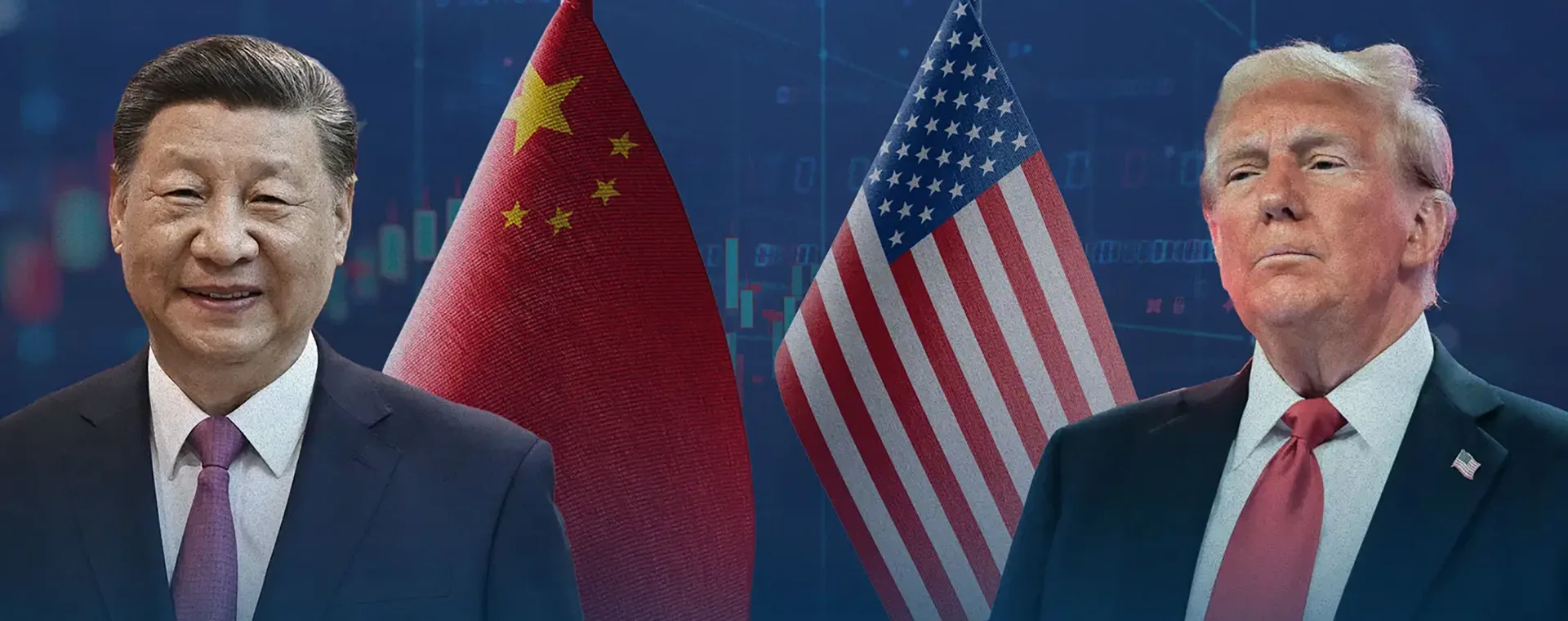
Can China end the war between the US and Iran?
While the prospects for U.S.-Iran peace negotiations remain unclear, China is gradually becoming a powerful behind-the-scenes mediator, as both Washington and Tehran seek Beijing’s mediation to end the war.
Iranian Foreign Minister Abbas Araghchi's visit to Beijing on May 6, at a time when Washington has presented a new peace proposal, is interpreted by observers as an attempt to attract China's support for the negotiations. The subject of Iran is expected to be one of the main themes of US President Donald Trump's visit to China and his meeting with Xi Jinping, the president of this country, on May 14 and 15.
"In theory, Beijing could use its influence over Iran to facilitate a comprehensive and sustainable deal, as it did in the Islamabad negotiations when it pressured Tehran and forced the Islamic Republic to accept a ceasefire that, while extremely fragile, still holds." Still, some Chinese analysts have downplayed Beijing's role, pointing to the unwillingness of both sides to reconcile, as well as disagreements within the Iranian leadership.
What is China's position on Iran's nuclear program and the Strait of Hormuz? In conjunction with Abbas Araghchi and Wang Yi, the foreign ministers of Iran and China, meeting on May 6, the United States proposed a 14-item one-page memorandum of understanding, said to be aimed at formally ending the war and establishing a framework for long-term negotiations.
And despite Donald Trump's claim that an agreement is close, Chinese media reported, citing Iranian sources, that Tehran has not responded to America's new proposal, because it considers some of its clauses "unacceptable." And it is a request that Tehran has previously rejected.
Beijing has a relatively consistent stance on the nuclear issue. Wang Yi said in his meeting with Abbas Araqchi that China welcomes Iran's commitment not to develop nuclear weapons, but at the same time believes in Iran's legitimate right to the peaceful use of nuclear energy. On the reopening of the Strait of Hormuz, China's foreign minister called on the parties concerned to "respond as soon as possible to the serious demands of the international community" and resume "normal and safe passage" in this waterway.
The Iranian foreign minister also said that the Strait of Hormuz issue "can be resolved and settled quickly"; And these were seen as a sign of Tehran’s willingness to reopen the strait. And it seems that America has also shown some flexibility in its position, and proposed in the memorandum of understanding to lift the naval blockade coinciding with the reopening of the strait by Iran.
How influential is China on Iran?
Abbas Araghchi and Donald Trump’s visits to China show that the country is becoming an important intermediary with a different location because of its own influence over Tehran. According to estimates, before the war, China imported 80 to 90 percent of Iran's total oil exports informally and through its "shadow fleet" and independent refineries known as T-Bat, and continues to support Iran economically.
Washington recently imposed additional sanctions on Chinese banks and companies to disrupt Iran's oil revenues, but Beijing showed a sharp reaction and issued for the first time a prohibition order that Chinese authorities should not recognize or implement US "unilateral sanctions." Western media have also accused China of supplying Iran with shoulder-fired missiles, sodium perchlorate that can be used to produce solid rocket fuel, and other dual-purpose goods and technologies.
Beijing called the allegations "baseless accusations" and stressed that China always takes a responsible approach to arms exports. And yet, the financial and logistical support attributed to China could open Beijing’s hand to seriously influence Tehran’s decisions, and that Beijing could play an important role behind the scenes in shaping the prospects for peace.
The New York Times reported, citing Iranian officials, that Beijing's last-minute intervention led to Tehran's acceptance on April 8, when negotiations in Islamabad reached an impasse, of a Pakistani-brokered ceasefire proposal. The initial two-week ceasefire was extended on 21 April, and despite the recent exchange of fire between the parties, it remains very fragile.
Can China Build a Sustainable Peace Agreement?
China can play a role in paving the way for a comprehensive and sustainable agreement. "As Beijing continues its efforts to bring Iran and the Gulf states to the negotiating table, it has simultaneously tried to use the influence of third parties such as Saudi Arabia as leverage."
During his visit to Beijing, Abbas Araqchi also had a phone conversation with Faisal bin Farhan, the foreign minister of Saudi Arabia. The two sides stressed the importance of continued diplomacy and close coordination among West Asian countries to reduce tensions and prevent the escalation of the conflict. This telephone conversation took place immediately after the meeting between the Foreign Ministers of Iran and China; The meeting, in which Wang Yi called on Middle Eastern countries to “take charge of their own destiny,” encouraged Iran and other Gulf states to engage in dialog. It also supported the establishment of a “regional framework for peace and security”.
In recent years, China has been a serious supporter of reconciliation between Iran and Arab countries. And in 2023 Beijing brokered the Beijing Agreement to resume diplomatic relations between Tehran and Riyadh, though that reconciliation track was then affected by regional tensions stemming from the Israel-Hamas war and weakness.
Saudi Arabia reportedly did not accept the US military's use of its bases and airspace; And it’s the action that reportedly prompted Donald Trump to abruptly halt operations of the “Freedom Project” dedicated to steering ships stuck in the Strait of Hormuz.
By pressuring Iran, cooperating with Pakistan to advance peace negotiations, and using Saudi Arabia’s influence to prevent the spread of tension in the Gulf, as well as dialog with Donald Trump at the highest level, China may be in a position to install a comprehensive ceasefire agreement. Yet, many Chinese commentators considered the scope of Beijing's mediation limited.
If the two sides have no desire for reconciliation, the expectations from China to help reach an agreement will be "unrealistic," said Hu Xi-jin, a senior Chinese analyst. Jin Kanrong, a professor at Renmin University in China, also pointed to differences within the Iranian leadership and said Beijing is only in touch with the moderate wing, and it is not clear whether the IRGC, which is adopting a more radical approach, will agree to the peace deal.
Source: BBC

The Iraqi Institute for Dialogue, the logistical sponsor of the Baghdad International Book Fair, opens its own pavilion at the fair

The Iraqi Institute for Dialogue publishes "The Diplomatic Portfolio" by Dr. Karrar Al-Badiri
Official agreement between Iraqi Institute for Dialogue and the Iraqi Media Network to sponsor The Seventh Annual International Conference of “Baghdad Dialogue” 2025

Invitation to the 79th issue of Dialogue of Thought
Prime Minister: The path of development will make Iraq a regional political and economic powerhouse
Seventh Baghdad International Dialogue Conference Call for Papers
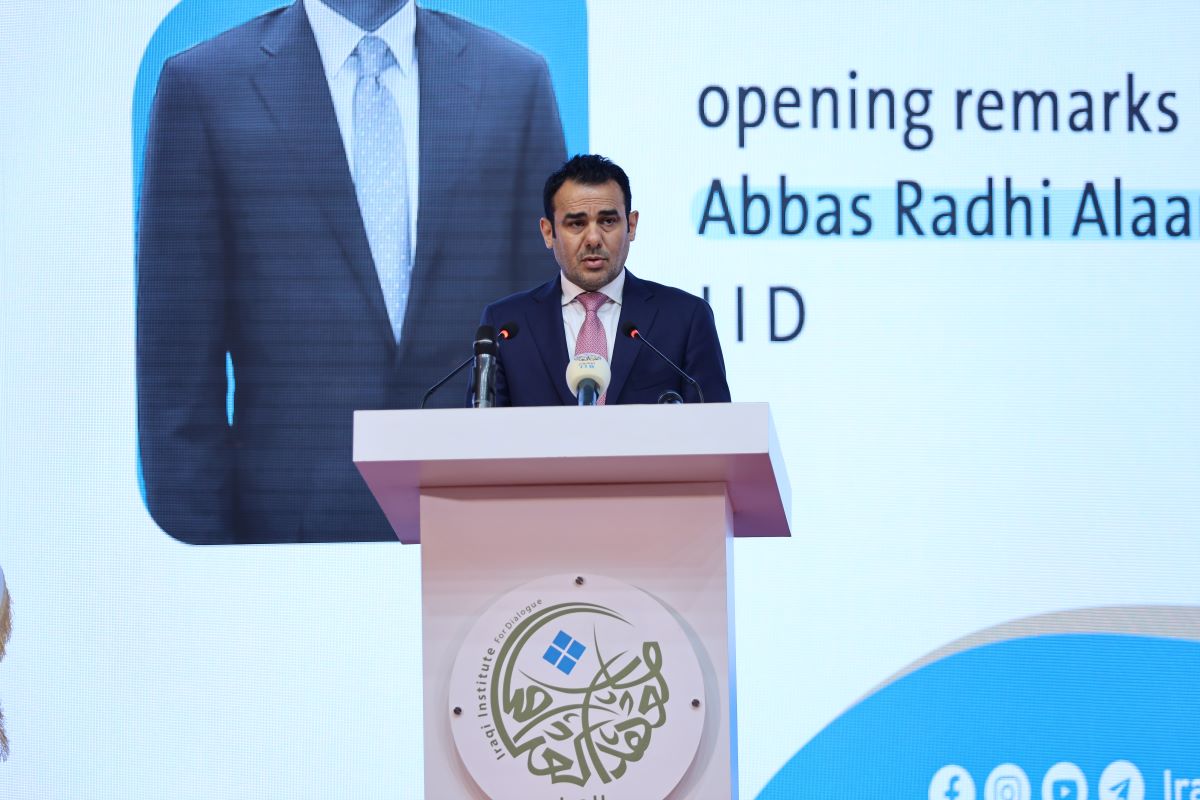
Speech of the Director of the Iraqi Institute for Dialog at the Sixth Baghdad International Dialog Conference
Comments