


By Dr.Nadia Helmy
China analyzes Trump’s push to expand the Abraham Accords in the Gulf and the Middle East
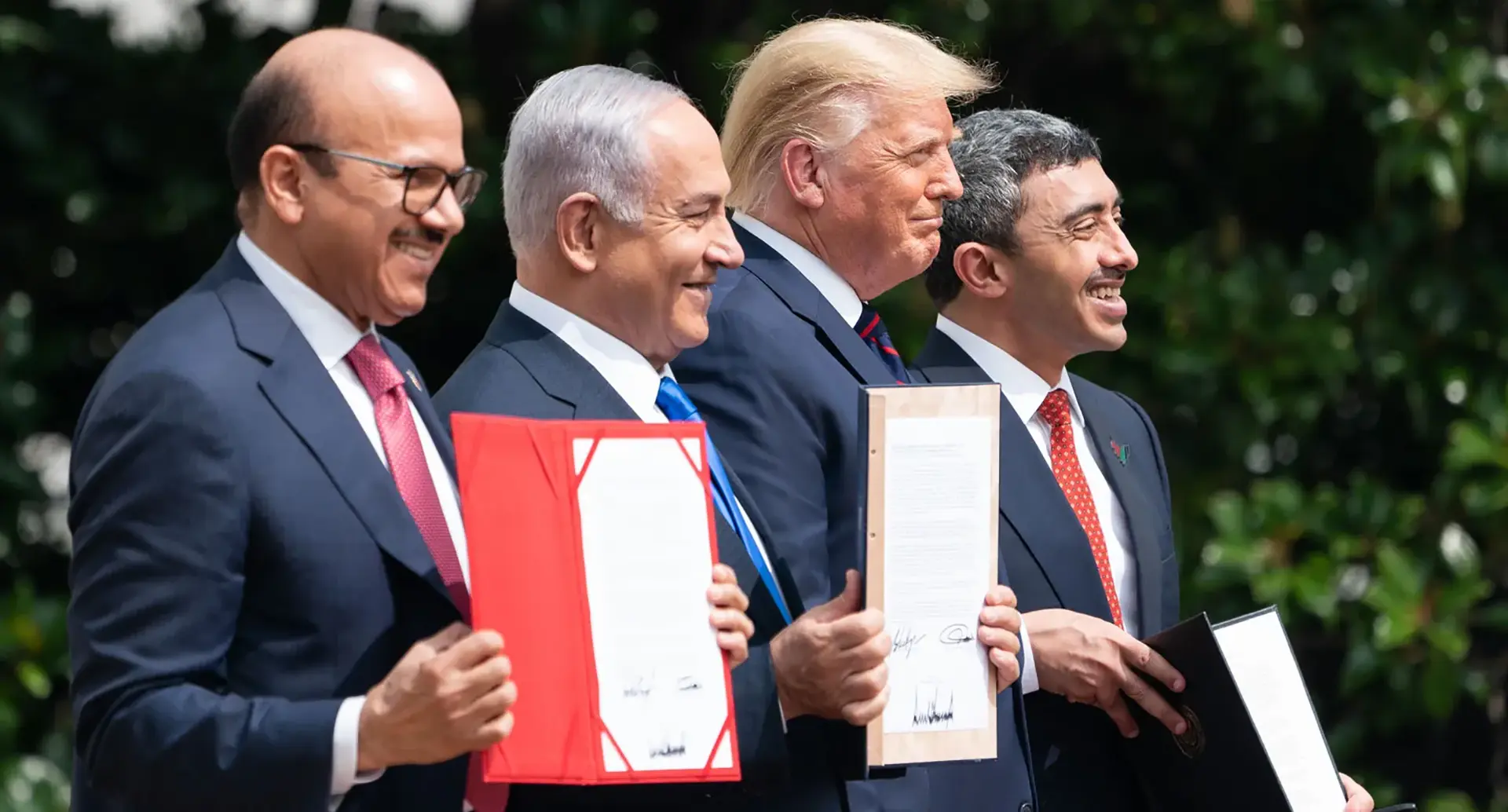
Chinese intelligence and military circles are analyzing the Abraham Accords between the Gulf states, the Middle East, and Israel, not as peace treaties, but as the infrastructure for a technological and military alliance linking advanced Israeli technologies to Gulf financial capabilities under a U.S. umbrella, with the aim of countering China.
Beijing is also closely monitoring the expansion of these agreements with Israel to include important Asian countries, such as the accession of Kazakhstan (in Central Asia), and the possible repercussions on China's national security. Accordingly, Beijing fears that this Israeli-Gulf axis, operating under the auspices of the Abraham Accords, will provide Washington with a powerful regional intelligence network capable of monitoring Chinese military and technological movements, particularly along vital sea lanes and in ports.
And official Chinese analysis and research suggests that the Abraham Accords have moved beyond the traditional concept of diplomatic peace to become a strategic network, mainly backed by the United States, aimed at containing China’s growing influence in the Middle East. And Chinese experts and military and intelligence think tanks on the Middle East believe that regional joint ventures, which will integrate Israeli technology with Gulf capital under the cover of agreements, could form a successful counterweight that reduces Chinese dominance in the Middle East and Gulf telecommunications and infrastructure sectors, compared to other Western and American initiatives.
In this context, Chinese military strategists and analysts view the Abraham Accords as a comprehensive security and economic system, not just a bilateral diplomatic move between each individual Gulf state and Israel. This Chinese reading is based on several dimensions that it considers an American and Israeli move to re-engineer alliances in the Middle East and Gulf at the expense of China. Chinese think tanks believe that the Abraham Accords aim to merge some regional powers into a single defense and economic axis supported by Washington, creating a regional structure that isolates rival powers such as China and Iran, and limits the opportunities for Beijing’s geopolitical and economic expansion.
Beijing recognizes that the normalization of Gulf-Israeli relations opens up alternative trade routes, infrastructure, and logistical networks, such as the planned Israeli-Gulf-Indo-European Connection (Indo-Israeli Corridor) projects linking the Middle East with Europe; Which could sideline China's "Belt and Road" initiative and weaken Beijing's diplomatic clout.
And the Chinese intelligence and military circles analyze the paradox of the Abraham Accords, which China sees as a (proactive step) from Washington to enhance its influence at a time when Chinese diplomacy has intensified in the region, which was embodied in Beijing's mediation of agreements such as the Saudi-Iranian rapprochement in March 2023, and the "Beijing Declaration" of Palestinian factions and reconciliation between various Palestinian currents and movements on July 23, 2024 in the wake of the Gaza war. Accordingly, China is dealing with this reality by strengthening its role as a development force and a neutral peace broker, basing its balanced strategic and economic relations with all parties to protect its vital interests in the region and the Gulf.
Dimensions of U.S. Strategy from the Chinese Perspective
The Chinese intelligence and military agencies believe that the expansion of the Abraham Accords, at the invitation of the Trump administration, is a US strategy aimed primarily at containing China's rise, restructuring the regional security system to serve American hegemony, and encircling Beijing's economic and security interests in the Middle East. The repercussions of this call crystallize in a number of Chinese strategic analyses that dismantled the dimensions of this call according to the following points:
Dual containment strategy: China’s intelligence services analyze that integrating Israel with Gulf powers into a Washington-led security and technology alliance aims to create a “Middle Eastern NATO” dedicated to intelligence and military surveillance, countering Chinese and Iranian influence together, and working to constrain China’s Belt and Road Initiative.
Threat to Energy and Port Security: The success of China's Belt and Road Initiative in the Middle East depends on the stability of the region; Beijing therefore values the Abraham Accords as a tool that could further polarize the region and spark new conflicts, threatening China’s energy security and vital trade paths. China's massive investments in infrastructure and ports, such as the UAE's Khalifa Port and Oman's Duqm Port, are based on the “security through development” equation; Thus, the expansion of agreements will constrain this Chinese expansion.
Creating technological alternatives and direct competition: Beijing views U.S.-backed initiatives, particularly the Abraham Accords, as alternatives and direct competitors to the Belt and Road Initiative, and aims to reduce regional dependence on Chinese technology and finance, such as China’s Huawei’s 5G networks.
China also views these U.S. attempts to expand the Abraham Accords as a deliberate effort to keep the Gulf states out of Beijing. Trump's call for Gulf and Middle Eastern states to join Abraham's agreements with Israel is seen as a kind of political and economic blackmail to force Gulf states to choose between expanding investment and technological partnerships with China, or succumbing to the U.S.-Israeli security umbrella. And Chinese intelligence, military and security concerns are that the expansion of these agreements will spark an arms and technology race between Washington and Beijing.
Israel’s technological integration with some Gulf states raises concerns within the Chinese military about the penetration of advanced Western and U.S. surveillance and spying tools into the region, which Beijing sees as a direct threat to the security of its networks and infrastructure across the Middle East.
For China, this falls within the dilemma of regional and political polarization aimed at igniting conflicts and essentially isolating Iran; China believes that building an alliance directed primarily against Iran weakens diplomatic efforts and prevents the establishment of a comprehensive security system, as evidenced by widespread regional escalation and instability that negatively affects global trade and supply chains.
In response to the US and Israeli polarization policies directed against it, China has adopted the principle of "alternative diplomacy", sponsoring the Saudi-Iranian reconciliation to provide an alternative model based on de-escalation through diplomacy, which protects its economic interests and the Belt and Road Initiative from the repercussions of any comprehensive regional conflict.
Technological and Military Deterrence: A Reading in the Bikini Scene
By reading the political landscape inside Beijing, I can decipher China's intelligence and military perspective on the Abraham Accords, seeing it as a form of technological containment and a way to fill the U.S. vacuum in the face of the Belt and Road Initiative.
Foiling China's Digital Expansion: Beijing sees the Abraham Accords as the cornerstone of rival projects like the India-Middle East-Europe-Israel Economic Corridor (IMEC), which aims to thwart Chinese expansion and marginalize its technology. Washington is using these Gulf partnerships to push for the replacement of Chinese communications technology (especially Huawei's 5G networks) with Western and Israeli alternatives in the Gulf, with the aim of consolidating digital dominance. The Chinese concern lies in the fear of imposing a U.S. “technological iron curtain” that prevents Chinese companies from accessing markets and vital data in the region and the Gulf.
Capital Flow and Cybersecurity: Chinese reports have documented a massive influx of Gulf capital into Israeli companies specializing in artificial intelligence, cybersecurity, and semiconductors. And Beijing fears that this Gulf-Israeli alliance will create technological and military supply chains that are completely independent of China and resistant to economic pressures, which in turn threatens China’s integrated military and security defense infrastructure and systems in the Gulf and the Middle East.
Direct military threat: The Chinese armed forces, represented by the People's Liberation Army (PLA), view with great concern the integration of Israeli radar and air defense systems with US and Gulf bases (under the umbrella of the US Central Command (CENTCOM)) as a direct threat to the security of China and its allies in the region. This Gulf-Israeli intelligence and technology cooperation also threatens China's cybersecurity; Beijing believes it gives the United States and its allies superior capabilities in digital espionage, network disruption, and cyber attacks, potentially jeopardizing its security investments in the region.
conclusion
Based on the above analysis, we understand that China views the Abraham Accords as a strategic shift reshaping alliances in the Middle East. Beijing is trying to balance its concerns about the expansion of US and Israeli influence in the region and the Gulf at the expense of its projects and investments in the Belt and Road Initiative, with the state of regional and political polarization created by these agreements under Washington's auspices.
d. Nadia Helmy - Visiting Senior Researcher at the Center for Middle East Studies (CMES) / Lund University, Sweden - Director of the South and East Asia Studies Unit.

The Iraqi Institute for Dialogue, the logistical sponsor of the Baghdad International Book Fair, opens its own pavilion at the fair

The Iraqi Institute for Dialogue publishes "The Diplomatic Portfolio" by Dr. Karrar Al-Badiri
Official agreement between Iraqi Institute for Dialogue and the Iraqi Media Network to sponsor The Seventh Annual International Conference of “Baghdad Dialogue” 2025

Invitation to the 79th issue of Dialogue of Thought
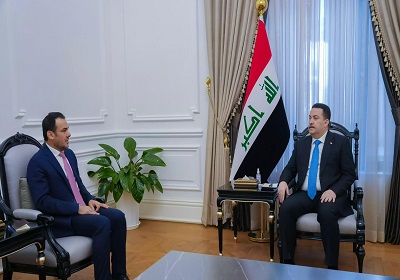
Prime Minister: The path of development will make Iraq a regional political and economic powerhouse
Seventh Baghdad International Dialogue Conference Call for Papers
Speech of the Director of the Iraqi Institute for Dialog at the Sixth Baghdad International Dialog Conference
Comments