


موغدا جوشي - مهتمة بالأمن الدولي
Ending American dominance of European defense?
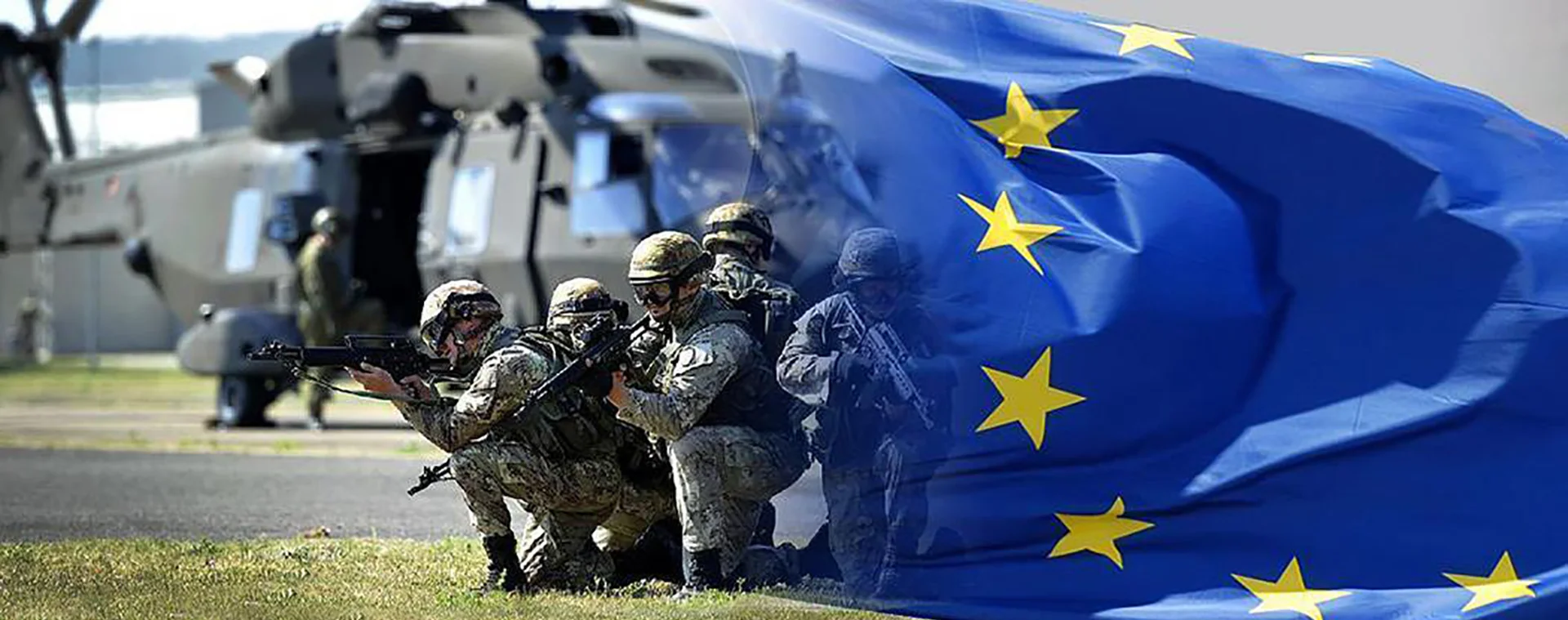
The second Trump administration refocused attention on the military within the elite’s security discourse, raising the bar on defense spending. And that trend has spread to NATO, with Trump increasingly expecting his European allies to expand their defense spending if they want to maintain massive U.S. military support across the continent, especially given the continuing Russian campaign in Ukraine and the threat of a spillover of the war.
And while member states have committed to spending at least 5% of their individual GDP on defense spending during the 2025 summit, some are finding it difficult to achieve that goal due to parliamentary and budgetary constraints. And the June 24 meeting between NATO Secretary-General Mark Rutte and U.S. President Donald Trump was poised to balance American expectations against European restrictions on defense spending.
Why does Europe need U.S. military support?
The Center for Strategic and International Studies (CSIS) 2025 report, titled "How Europe Can Defend Itself with the Least of America," analyzes the looming threat that Russia's campaign in Ukraine could spill over into Western countries.
In contrast, the presence of U.S. troops, artillery, air force and navy would make Russia more cautious and calculating before launching any attack in Europe. In essence, the U.S. military presence serves as a security guarantee to deter the spread of the Russian war to Western European countries. The prospects of fully activating NATO’s military capabilities to protect Europe from Russia are low, at least as long as the United States maintains its geographical presence.
How dependent is Europe on the US?
The CSIS report details the size of the U.S. military presence across Europe. Until 2025, the United States had nearly 80,000 troops stationed in various European locations, serving as a rapid reaction force to counter Russian aggression.
It commands part of Europe's advanced land forces (FLF) in Poland, contributing to Europe's initial forward deployment. In addition, there are reinforcement commands in the reserve, if necessary to support the efforts of troops on the ground. In terms of air power, the United States leads its vast air arsenal from Ramstein Air Base, which houses the headquarters of NATO's allied air command. The U.S. Navy also operates in crucial European naval theaters, such as the Black Sea and around the Arctic, as an enhanced deterrent force on NATO’s eastern flank.
He argues that it is precisely this network, consisting of extensive intelligence, surveillance and reconnaissance (ISR) systems along with American “operating systems”, that enables the enforcement of the entire NATO strategy. And without this network, European countries will not have a coherent framework within which they can effectively act in the conditions of Russian aggression.
If the US withdraws, what is the European contingency plan?
And yet, outside the NATO framework, the European Defense Readiness Plan by 2030 aims to effectively integrate separate defense capabilities into a cohesive supranational framework by promoting "military mobility and infrastructure."
Faced with the constant vagaries of Trump’s decisions, Europe must be prepared to confront its own domestic issues and build its own connective tissue. And in a concrete sense, the U.S. military presence is a necessary condition for deterring Russian aggression. And yet it is time to confront the possibility that this American security presence may not be as reliable as it once was. Europe must increase its defense spending and address the issues of compatibility among its states directly, if it really wants to deter the Russian threat, and prepare itself in the future to engage in a level playing field.

The Iraqi Institute for Dialogue, the logistical sponsor of the Baghdad International Book Fair, opens its own pavilion at the fair
Official agreement between Iraqi Institute for Dialogue and the Iraqi Media Network to sponsor The Seventh Annual International Conference of “Baghdad Dialogue” 2025

The Iraqi Institute for Dialogue publishes "The Diplomatic Portfolio" by Dr. Karrar Al-Badiri

Invitation to the 79th issue of Dialogue of Thought
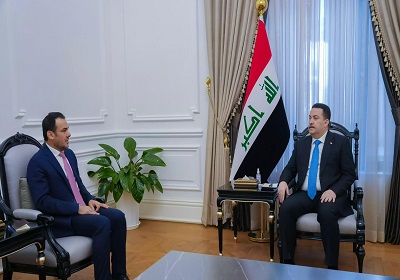
Prime Minister: The path of development will make Iraq a regional political and economic powerhouse
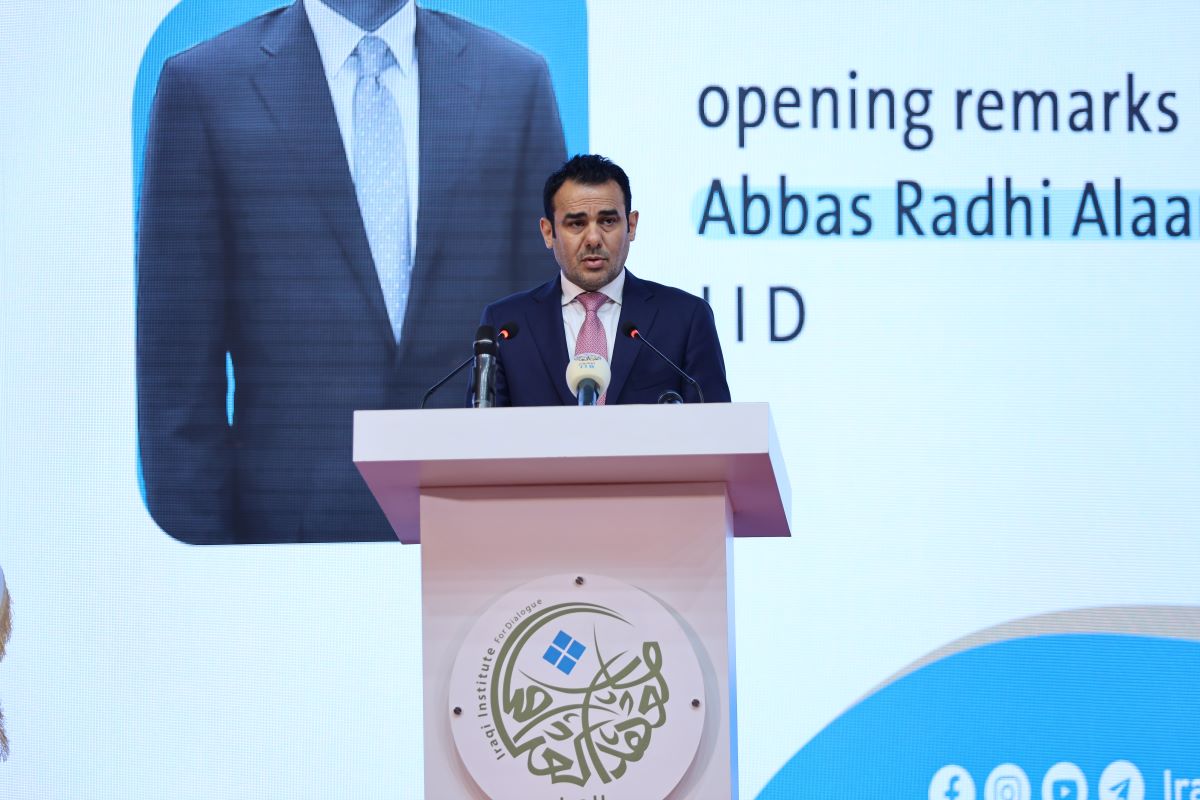
Speech of the Director of the Iraqi Institute for Dialog at the Sixth Baghdad International Dialog Conference
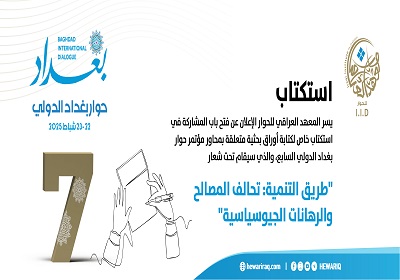
Seventh Baghdad International Dialogue Conference Call for Papers

Comments