


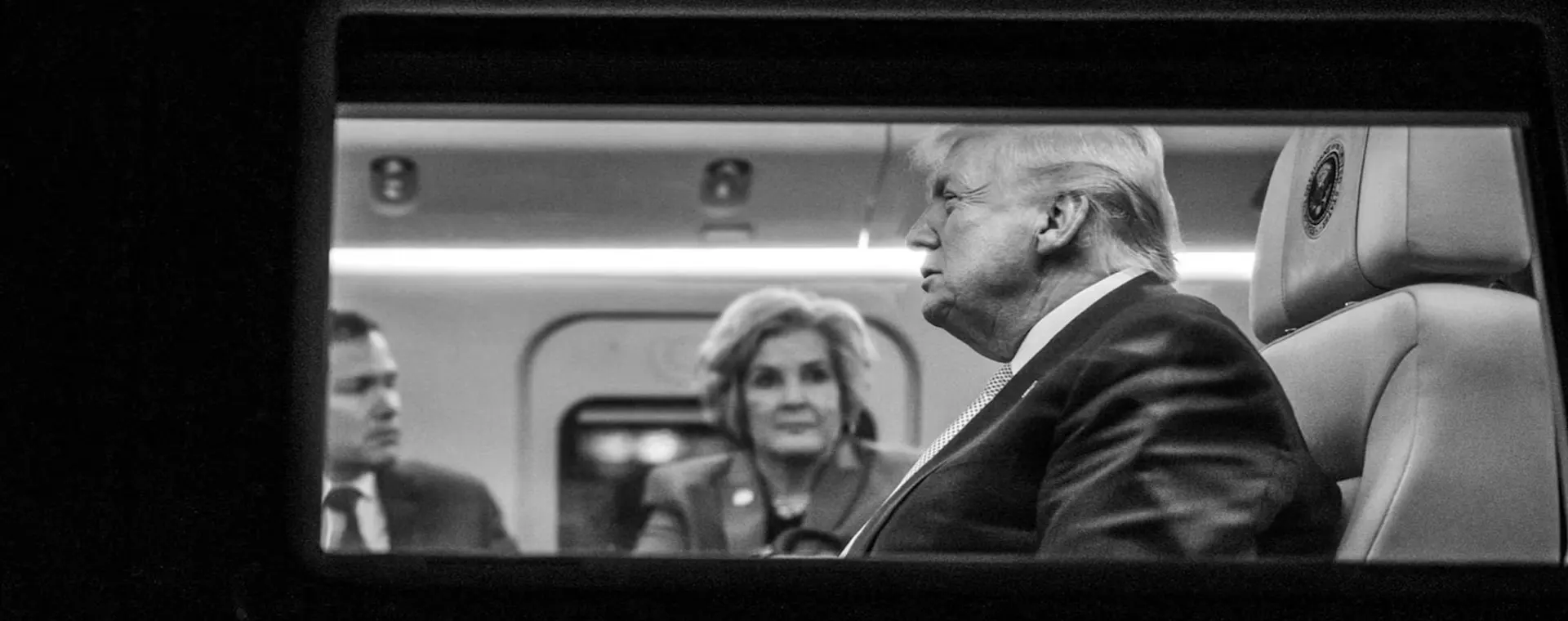
The end of the US State Department as we know it
For any U.S. diplomat looking to advance his career, this time seems, in theory at least, appropriate to seek a new position. "By late June, more than half of U.S. ambassador posts around the world were still vacant, including embassies at some of the most important diplomatic sites, such as Germany and Saudi Arabia." For specialists in African affairs, the opportunity seems greater; Nearly 80 percent of U.S. embassies in Africa have no accredited ambassador.
But the picture within the State Department itself looks less bright. Since Donald Trump returned to the White House in January 2025, he has made no secret of his contempt for what he called a “very foolish foreign policy establishment.”
And as the official face of U.S. foreign policy, and sometimes the arm with which Washington exerts influence on the international arena, the State Department used to have an exceptional standing abroad. Since the end of the Cold War, U.S. ambassadors and envoys have often dealt with host governments from a position of strength, basing U.S. influence on the power of provincial governors in empires.
Eighteen months into Trump’s second term, the department is no longer just an institution that is declining in influence, but appears to be directly targeted.
And in a clear departure from a 60-year tradition, Trump has sidelined career diplomats who used to run at least two-thirds of U.S. embassies. Of the 101 ambassadorial candidates during his second term, only nine were career diplomats.
And it comes as the department has sharply reduced staff by more than 3,000, or more than 20 percent, since Trump returned to power.
The administration describes these changes as a long-awaited overhaul of a bureaucratic institution that, in its view, has become detached from reality. And its officials assert that the State Department has become an organ that obstructs policies rather than contributing to U.S. national security goals.
Current and former diplomats see a crude politicization of the institution, along with the systematic exclusion of experienced people, as part of an “America First” culture that diminishes the value of regional knowledge and accumulated experience.
At the same time, traditional U.S. allies lament the decline in the State Department's balanced role in managing day-to-day diplomacy, while agreements crafted by inexperienced officials find it difficult to hold up or turn into tangible results.
And Nick Burns, who spent 31 years in the U.S. Foreign Service and was the last ambassador to China until Trump returned to power, says:
"We are witnessing the most devastating crisis for the U.S. diplomatic corps in its 102-year history."
Weakening American influence?
Senior State Department officials are concerned. Their concern is not limited to job losses or a decline in institutional standing, but rather to what they see as a weakening of U.S. influence as a result of the loss of accumulated expertise within the institution, and a move away from diplomacy as the main tool for foreign policy management.
“Things are very bad,” says William (Bill) Burns, who spent 32 years in the U.S. Foreign Service, including as U.S. ambassador to Russia and deputy secretary of state, before running the Central Intelligence Agency (CIA) under President Joe Biden.
And Trump’s policies are doing more damage to the State Department than they did during the Joseph McCarthy era in the 1950s, when the U.S. senator’s “Red Panic” campaign resulted in the United States losing much of its expertise on China, Burns said.
“It was confined to a relatively specific set of issues, and it cost the United States dearly for about fifteen years, until Nixon and Kissinger’s opening to China came. Today, the impact is everything; It is not limited to a specific region or a specific field of knowledge.”
And the former CIA director’s criticism is not limited to what he describes as the administration’s “campaign of vengeance” against the State Department and career diplomats, but rather points to what he considers to be a more serious matter, namely, the understatement of the value of professional diplomacy itself.
And Trump has relied on a number of his cronies to strike diplomatic deals, including last month’s Memorandum of Understanding with Iran, which is now on the verge of total collapse with the two countries exchanging blows. And many of the president’s critics blame the fragility of that deal — including clauses some saw as favoring Tehran — for his decision to sideline experts and specialists.
Burns, who has personally participated in a number of rounds of negotiations with Iran, adds:
“You need this kind of professional experience that is not politically biased so you can keep up with the Iranian negotiators, who I know from personal experience are very experienced on these files. And the same is true if one day we reach a stage of serious negotiations on Russia and Ukraine.”
Yael Limbert, who spent 27 years at the State Department and was fired as ambassador to Jordan on the first day of Trump’s second term, offers a more candid assessment:
"They outmaneuvered us in the negotiations. The Iranians are experienced negotiators, and they have brought with them teams of experts who know these files in every detail. The United States did not, unilaterally placing itself in a weaker negotiating position.”
Thoughtful and deliberate reform
As part of the Trump administration's broader campaign against what it calls the "deep state," administration officials are presenting the State Department cutbacks as a thoughtful and carefully executed reform plan aimed at realigning the department with the "America First" agenda.
And one senior Trump administration official asks:
“What is the real job of the State Department? She likes to see herself as the center of foreign policy making, but that’s not true. Its mission is to implement and represent the president’s foreign policy, not to shape it.”
And the official says that Marco Rubio, when he took over as secretary of state at the start of Trump’s second term, entered the department and quickly came to the conclusion: “That way, the institution can’t go on.”
Current and former ministry officials acknowledge that the institution really needed a thorough review. One veteran diplomat says that in recent years the ministry has failed to address chronic shortcomings, such as overlapping powers and competencies, while another argues that the ministry has sometimes dealt with political directives issued by the elected leadership in a manner characterized by procrastination or indirect resistance.
But many diplomats fear the reforms are just a cover to drastically downgrade the ministry. They are also concerned by the rapid pace of changes, exemplified, for example, by last year's sudden shutdown of the U.S. Agency for International Development (USAID), founded by President John F. Kennedy, a decision they see as having disastrous implications.
And Jacob Shapiro, a professor of international relations at Princeton University, says:
“There is some truth in saying that the State Department has long needed restructuring and modernization. "But what happened happened was done very quickly, without adequate consideration of the implications for American diplomacy."
Those close to the administration believe that the last time the State Department experienced a shift of this magnitude was with the onset of the Cold War about eight decades ago. But the roots of the current restructuring are clearly traced back to Trump’s first term, when he resented what he saw as the department’s reluctance to implement his directives.
And Mike Pompeo, who took over the State Department in the second half of Trump’s first term, followed the approach of most of his predecessors, whether Democrats or Republicans, based on the principle:
"I do what the president wants, and let the ministry run its internal affairs."
And Pompeo implemented the president’s policies, but did not seek to reshape the department from within. His motto was to please the president on the one hand, and to maintain the stability of the institution on the other. In his second term, Trump wanted a department more in line with his vision. “It’s about exercising power from the top down, and creating a foreign ministry that reflects his own perception.”
And Trump has made this clear in his choices for mediators in charge of managing international crises during his second term, relying on businessmen close to him and funders of his campaigns, such as Steve Witkoff and Tom Barak, as well as figures with close ties to his family, foremost among them his son-in-law Jared Kushner.
And while American presidents have, over successive generations, routinely appointed their cronies as special envoys or ambassadors in the most attractive capitals, such as London and Paris, and some have even achieved remarkable diplomatic success, this approach has always been coupled with reliance on experienced professional diplomats.
Nick Burns points out that the establishment of the U.S. Foreign Service in 1924 came mainly to end the "crony and loot-sharing system" that had characterized the 19th century, and to replace it with professionalism and experience. He argues that a return to that old approach weakens the ability of the United States to understand the world and deal with its complexities.
“Many of our most experienced diplomats were abruptly fired. Today there are no more career diplomats inside the rooms where decisions are made... This is a strategic mistake that we have inflicted on ourselves.”
In contrast, the Trump administration sees most of these criticisms as reflecting a mindset that no longer keeps pace with the nature of the contemporary world. Diplomatic cables that convey or analyze foreign capitals’ political situations are no longer as important as they used to be in an era dominated by social media, constant news cycles, and direct contacts between leaders, according to their officials.
A senior administration official says:
“Today, the mission of the embassy is, above all, to be a logistics hub that supports the implementation of foreign policy.”
And in this climate, American diplomats are no longer being ignored not only by the administration, but also by outside parties.
“The career diplomats I speak to spend their time reading newspapers or preparing memos that don’t reach any influential people.”
Diplomats representing U.S. allies, from Europe and the Middle East to East Asia, acknowledge that they are now focusing their communications on Trump’s inner circle and envoys, rather than the State Department officials who were the traditional channels of communication.
This shift is due not only to a shift in the center of political influence, but also to the fact that American diplomats themselves may not have a deeper understanding of Trump’s foreign orientations than their foreign counterparts, as well as becoming more inclined to self-censorship.
The former US diplomat says career diplomats still meet with foreign officials, but they have become "very cautious" in what they say.
“Deputy heads of missions and ambassadors no longer report as well as they used to, but they choose their words very carefully in everything that is sent to Washington.”
Marco Rubio, who combines the positions of secretary of state and national security adviser to the president, spends more time in the White House, where key decisions are made, than at the department’s headquarters in Foggy Bottom. This reinforces the impression, both inside and outside the department, that the State Department is fighting a defensive battle, if not already having lost much of its influence.
One former senior diplomat concludes the picture with a striking analogy:
“What the Foreign Office is subjected to is like a medieval siege; At first the city is bombarded with guns, then salts are scattered in the fields so it is impossible for it to get back to life."
Cultural transformation
If there’s one thing that brings together veteran diplomats and supporters of MAGA, it’s the acknowledgment that the U.S. State Department is undergoing a profound cultural transformation.
Trump’s team moved quickly to impose its “America First” vision within a department that it considers liberal-aligned, hostile to the administration’s direction, and accustomed to leaking information to the media. In the corridors of the ministry, the motive does not seem to be reform alone, but the spirit of revenge is no less present than the spirit of change.
And a senior Trump administration official says:
“There were many people who thought they were the ones making foreign policy, so they were a lot of objecting and making mistakes. It was very difficult to get anything done, and in the end you only get a faint bureaucratic memo full of reservations.”
Professional diplomats say they have long viewed themselves as politically unbiased public servants and warn that the department is living in a climate of fear, with many feeling they are “watching behind their backs” for fear of being tested for their loyalty to the MAGA vision of “Make America Great Again.”
And one senior Trump administration official says that Marco Rubio, immediately after becoming secretary of state, entered the department and declared, “That way, the institution can’t go on.”
And Nick Burns rejects the accusation by Trump allies that the State Department has turned into something of a liberal voice-over platform.
"Throughout my decades at the ministry, we have been keen to create an environment where employees can voice their opinions and argue policies when they see them as wrong. And our principle was clear: after a decision is made, everyone salutes and commits to its implementation.”
Bill Burns draws attention to what he describes as a new focus within the department on the concept of "loyalty", and believes that this concept has become a practical examination of the political leanings of employees, starting with appointment procedures, through promotions, and ending with performance evaluation.
And he says, “I think that’s a completely unhealthy trend. “For all the flaws of the State Department, my experience with it has been that employees leave their political affiliations out of the door of the institution.”
And when you start uprooting this culture from the workers, you end up mimicking many authoritarian regimes that intimidate professional public servants, which ultimately leads to bad decisions.”
For much of the 20th century and the first decade of the 21st century, transitions of power between Republican and Democratic foreign ministers have been relatively smooth, not least because the two parties shared a convergent public view of the United States' role in the world.
But the rise of the “America First” wing and its dominance of the Republican Party changed that equation.
And the Ben Franklin Fellowship has become a major focus of internal debate about this shift. "Founded two years ago, this group includes current and former conservative diplomats, and openly declares that its goal is to promote conservative ideas, attract cadres, and support the appointment of governors within the State Department."
And one of its founders, Matt Boyce, who joined the State Department in the 1980s during Ronald Reagan's presidency, says:
"Over the past three decades, the ministry has gradually veered to the left. “It started under Bill Clinton, and then accelerated dramatically during the Biden administration.”
He cites as an example the expanding interest, during the administrations of Barack Obama and Joe Biden, in diversity, equality and inclusion programs, as well as the expansion of USAID programs, which he believes "were not in the national interest of the United States."
“There were a lot of positive aspects within the ministry, but the atmosphere and policies were gradually tilting to the left. And if you’re a liberal you won’t notice it, or you’ll consider it normal. If you belong to half of Americans who don't classify themselves as progressive or liberal, you'd say, "Wait a minute... we're going in the wrong direction."
Boyce maintains that the Benjamin Franklin Fellowship is not an organization of Trump supporters, but a vast network of different spectrums of conservatives.
"We have members who are Reagan supporters, libertarians, supporters of the 'America First' slogan, and others who were in favor of John McCain. And the thing they all have in common is that they're not liberal."
He adds that a number of group members have also lost their jobs as a result of the recent downsizing measures.
But career diplomats view the group with concern, arguing that it has become part of the new culture within the ministry, and that it plays a role in monitoring employees' political orientations.
And a former U.S. diplomat says that some ambassadors are asking their positions on the events of the storming of the Capitol on January 6, 2021 by Trump supporters.
Yael Limbert, a former ambassador to Jordan, says:
"There is a clear sense that there are political observers everywhere. And this level of fear has never been so prevalent, with employees fearful that any criticism or alternative to policies would be interpreted as a sign of disloyalty, potentially exposing them to the loss of their jobs.”
Matt Boyce, on the other hand, is not sympathetic to these concerns. "Some diplomatic staff try to defend their legacy, while others make unfounded claims of discrimination," he says."
"It's ironic that people who have been in a position of influence for decades talk about being discriminated against. “The Benjamin Franklin Fellowship strongly supports the administration’s efforts to get the state ship back on track.”
No return to the past.
To what extent should Trump's opponents seek to restore the State Department to its previous image? This will be one of the most prominent questions the Democratic Party will face if it returns to the White House in the 2028 election.
And a number of foreign policy thinkers close to the party acknowledge that calling for the restoration of the role that the United States, before the arrival of Trump, played as the dominant force in the international system is no longer a politically acceptable option in the United States today.
They see the real challenge as reimagining U.S. diplomacy in line with the new reality. They point out, for example, that the U.S. partial retreat from global engagement appears to be a difficult trend to reverse, making it harder to justify the high cost of maintaining Washington’s vast diplomatic network, even at a time when China is making intense efforts to bolster its influence and win the support of the global South.
One strategist even argues that the next Democratic administration should take advantage of Trump’s imposed reforms — even if, as he puts it, they were driven by very wrong motives — to rethink the State Department’s structure and adapt it to the demands of a world in which its leaders communicate directly with one another via WhatsApp.
And a number of veteran diplomats agree that the State Department has reached a historic turning point after which it is difficult to return to what it was before. And Bill Burns, the former director of the Central Intelligence Agency, argues that the State Department in its traditional form may never return.
And he says: “During Trump’s first term, the presumption was that the arrival of a new administration with a different vision, four years later, would be enough to repair much of the damage and restore what was lost. This time, we are facing a challenge that will affect an entire generation."
And he adds that trying to revive the traditional State Department model would be a mistake in itself, saying, “The biggest mistake any new administration could make if it took over at the beginning of 2029 is to imagine that the problem can be solved by simply turning the clock back and restoring the conditions that existed.”

The Iraqi Institute for Dialogue, the logistical sponsor of the Baghdad International Book Fair, opens its own pavilion at the fair
Official agreement between Iraqi Institute for Dialogue and the Iraqi Media Network to sponsor The Seventh Annual International Conference of “Baghdad Dialogue” 2025
The Iraqi Institute for Dialogue publishes "The Diplomatic Portfolio" by Dr. Karrar Al-Badiri

Invitation to the 79th issue of Dialogue of Thought
Prime Minister: The path of development will make Iraq a regional political and economic powerhouse
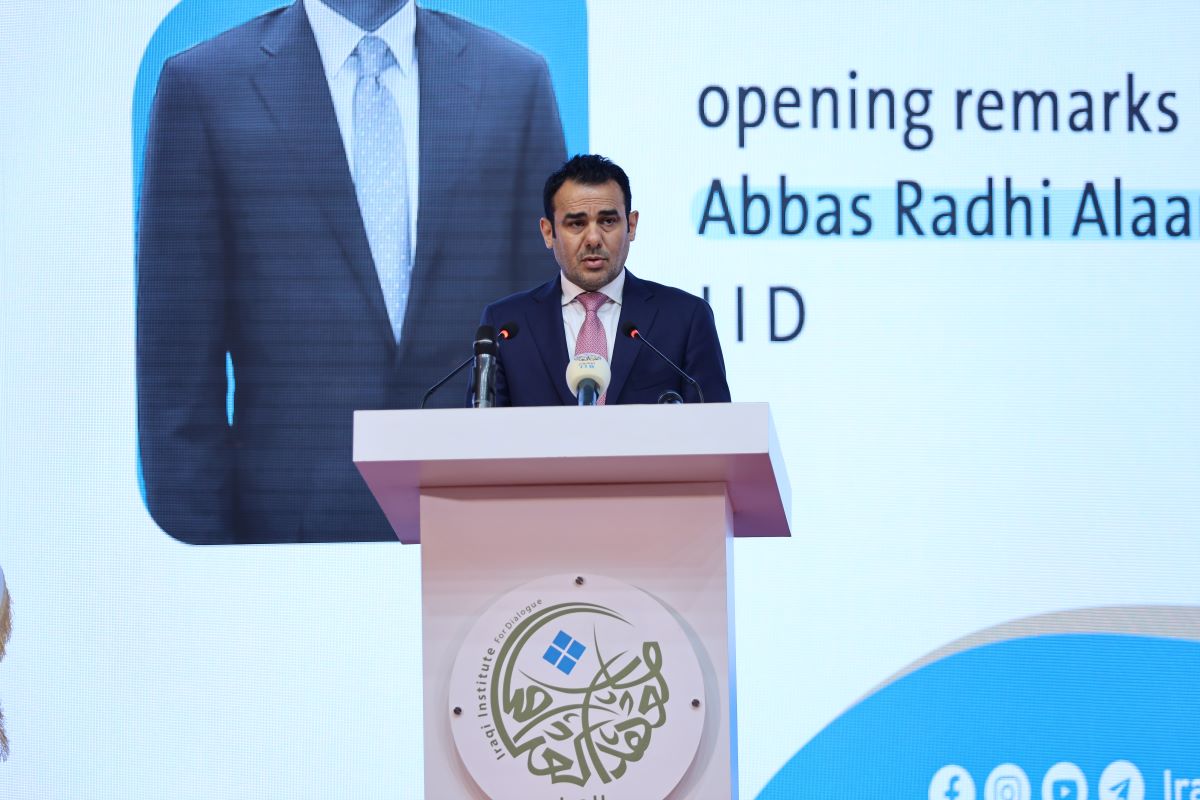
Speech of the Director of the Iraqi Institute for Dialog at the Sixth Baghdad International Dialog Conference
Seventh Baghdad International Dialogue Conference Call for Papers
Comments