


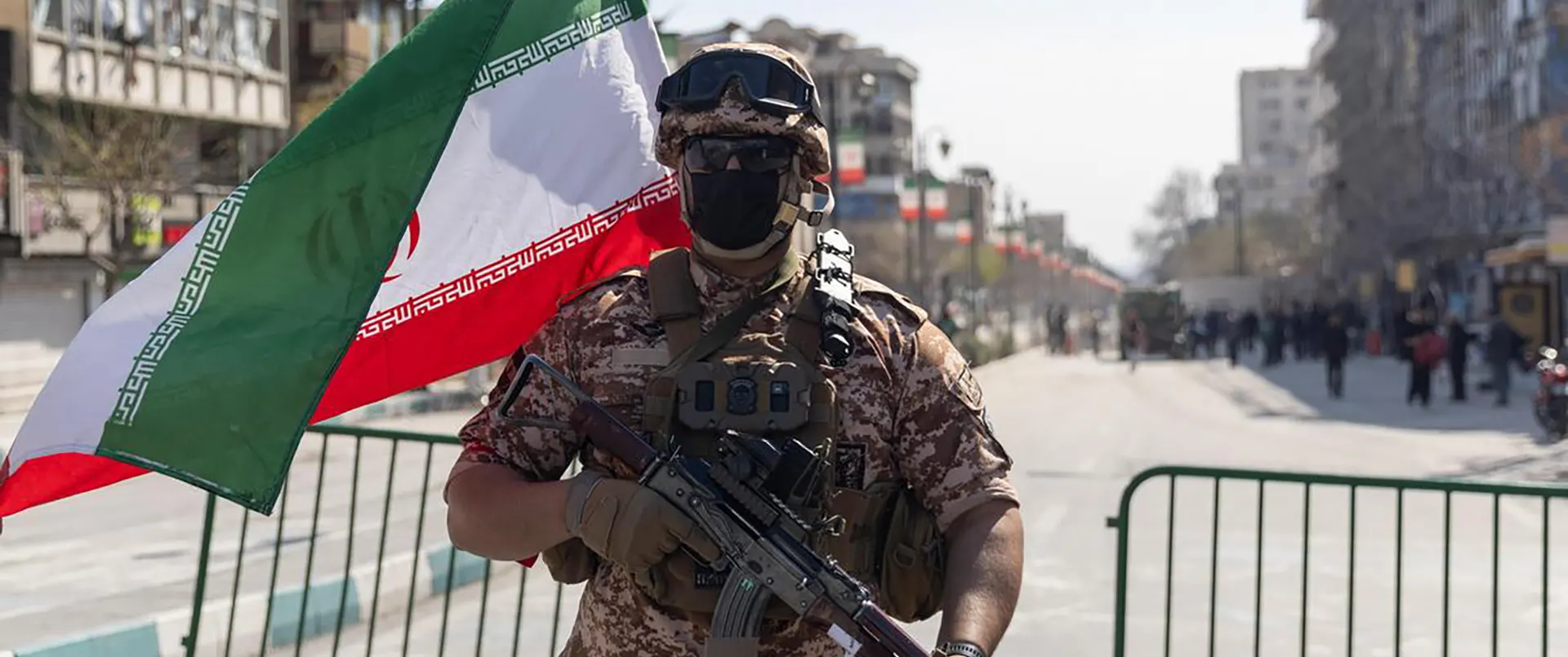
What has the war that was supposed to weaken Iran changed?
The continuing and widening crisis of war with Iran has led many media and analysts to discuss what this confrontation has changed in the Middle East, and whether any of its parties have a possible way to end it.
The Atlantic writes about the shifting balance of power in Iran's favor, while The New York Times discusses the impact of war on U.S. defense and allied industries. The Wall Street Journal highlights new signs that senior Iranian officials are eager to end the war, while The American Conservative is turning its attention to Pakistan, which may move again to help find a way out of the crisis.
The war shifted the balance of power in Iran's favor
Robert Kagan, a senior fellow at the Brookings Institution and one of America's best-known foreign policy analysts, argued in an article for The Atlantic that the war with Iran produced an outcome that was almost exactly the opposite of what Washington and Israel had expected.
Over the past two years, Kagan writes, Iran has faced heavy sanctions, attacks on its nuclear facilities, the killing of several of its top officials, as well as weeks of bombing. And yet, not only did the regime remain in place, but it was also able to change the balance of power in the region.
And the tipping point, he argues, occurred when Iran proved that, in response to the attacks, it could target critical oil and gas infrastructure in the Gulf states and dramatically raise the cost of the war’s continuation to the global economy.
According to the author of the article, it has since become clear that Washington fears an escalation of the war more than Tehran. "Limited stockpiles of U.S. interceptors and defense systems, coupled with fear of further damage to regional energy facilities, have limited the Trump administration's options."
But the most important part of Kagan's argument concerns the Strait of Hormuz. Iran's control of the waterway's navigation might be more valuable to Tehran than a nuclear weapon; Not only does it provide a deterrent, but it also provides a permanent tool to pressure other countries, generate revenue, and weaken the U.S. sanctions regime.
According to The Atlantic, the consequences of the war will not be limited to the Gulf. Arab states in the region may be more likely to come to terms with Tehran, rather than relying on American security assurances. And Washington’s allies in Europe and Asia may also begin to question the United States’ ability to fight another major war.
Kagan concludes that the world's concern should not be limited to what Iran might do if it possessed a nuclear weapon, but should also include Iran emerging from war believing it can confront the United States, raise the cost of escalation, and force Washington to back down.
Iran's Economic Calculation Day
Gordon Sondland, the former U.S. ambassador to the European Union during Trump’s first term, addressed the new phase of economic pressure on Iran from a different angle.
Sondland argues that the significance of what the Trump administration calls “economic reckoning day” is not limited to adding the names of Iranian individuals and institutions to sanctions lists. This time around, the primary target is the countries, banks, refineries, shipping companies, and intermediaries that are still helping Iran continue its trade with the world.
And for years, he says, U.S. allies, particularly in Europe, have been able to benefit from their economic ties with Washington, while at the same time maintaining their trade channels with Iran. But Trump’s new policy seeks to end this possibility, and to put governments and businesses in front of a clear choice: trade with Iran, or access to the U.S. economy.
And Europe has previously argued that continued trade with Iran gives the West a political leverage card. But according to Sondland, Iran has benefited from trade, while Europe has rarely used that card.
And so he describes Trump’s new policy as not just another round of sanctions, but an attempt to force U.S. allies to become more directly involved in isolating Tehran economically.
Iran war 'catalyst for transformation' in US defense industries
One of the less obvious consequences of the war is the acceleration of U.S. and Gulf efforts to produce large numbers of low-cost interceptors to counter Iranian drones. This led to a shift in the way defense industries operated that for years had been known for slow production and high costs.
And since last month, Florida-based US startup Powerus has been operating a small factory in the UAE, where workers assemble 3D-printed parts to produce interceptors that can disrupt Iranian drones in the air.
The price of the interceptor aircraft, which bears the name “Guardian”, is about $5,000. It is based on a Ukrainian design that has proven effective in the face of Russian “witness” marches. Its parts can be fitted in a manner similar to Lego's, but unlike Lockheed Martin's PAC-3 interceptors, it is not capable of countering ballistic missiles.
The economic logic of the project is based on a simple equation: at the beginning of the war, the UAE used interceptor missiles costing millions of dollars each to shoot down marches worth no more than $40,000; And it’s an equation that experts say is unsustainable in the long run.
Factories associated with Powerus currently produce about 3,000 interceptors per month. And by establishing a network of factories in various regions of the world, including India, the company seeks to raise production to 15,000 aircraft per month by mid-2027.
And these shifts come amid unprecedented pressure from Iranian attacks on the UAE. "Since the start of the war in February, Iran has fired more than 500 ballistic missiles and nearly 2,000 drones toward targets inside the UAE, according to the report."
The attacks killed at least 15 people, disrupted an oil refinery, and destroyed two Amazon data centers. And the scale of the attacks, coupled with the decline in US interceptor missile stockpiles, has pushed countries in the region towards manufacturing weapons on their territory.
And the New York Times says these trends aren’t limited to startups. Lockheed Martin, the world’s largest defense contractor, announced in July that it would produce cheaper interceptors in Europe in cooperation with European partners. Raytheon has also started production of the Kayoti anti-drone systems in the UAE.
And for the UAE, the goal is no longer limited to buying U.S. weapons, but includes achieving independence in defense capabilities, and providing the possibility to buy and produce from a variety of sources.
And yet, experts warn that cheap interceptors complement and do not replace expensive systems, especially since Iran is likely rebuilding its missile stockpile and may soon get a faster, jet-powered version of the Russian-designed Shahed drone.
Indications from Tehran of a Willingness to End the War
As the United States and its allies prepare for the possibility of war, the Wall Street Journal reported signs inside Iran that some senior officials are concerned about the cost of continuing the fight.
And Iranian President Massoud Pezeshkian and Speaker of the Shura Council Mohammad Baqer Qalibaf have publicly stressed the need to end the war and focus on the country’s economic crisis. This position puts them in the face of more radical currents, which demand a tougher approach to the United States.
"The war must end at some point," Bazhkian said, and Iran would be better off moving to end it now, as long as it can speak from a position of strength.
Qalibaf warned, though in a less blunt tone, that military force cannot achieve security without an economy that can meet the needs of citizens, adding that those who have experienced war know the value of peace.
According to the Wall Street Journal, six months of war, sanctions and economic restrictions have put new pressure on an economy that was in serious trouble even before the fighting erupted. The national currency has depreciated and securing daily expenses has become more difficult for many Iranians.
But these statements do not necessarily mean that the end of the war is near. Iran's more hardline currents have set tough conditions for reopening the Strait of Hormuz, while the Trump administration is demanding more concessions from Tehran.
Analysts told the paper that these circumstances could plunge the two sides into a vicious circle; "Increased U.S. pressure makes Tehran's retreat all the more humiliating, while continued Iranian resistance pushes Washington to ratchet up the pressure."
And so, despite new messages from Bezeshkian and Qalibaf, the likelihood of another round of escalation may remain greater than the likelihood of an agreement.
Assem Munir and Iran's Call to Join the Mecca Defense Pact?
Pakistan's army chief, Asim Munir, plans to visit Tehran on Monday for talks with Iranian officials, a visit that could form part of Islamabad's efforts to mediate between Iran and the United States, the right-wing magazine The American Conservative reported.
And the magazine quoted a Pakistani government source as saying that Munir will discuss Trump’s recent threats to tighten economic pressure on Iran, and the possibility of returning to an understanding reached by Tehran and Washington mediated by Islamabad, along with developments related to the Houthis.
Al-Arabiya also reported that the Pakistani army chief would carry American messages to Iranian officials.
The magazine also pointed to unconfirmed reports that Iran has been invited to join a new defense alliance between Saudi Arabia, Turkey and Pakistan.
The Iranian Foreign Ministry welcomed the formation of this alliance, considering it an indicator of a positive transformation in the regional security system.
According to the magazine, Asim Munir's visit may reveal that Pakistan is seeking to play a greater role, concurrently, in mediating between Tehran and Washington and in the new security arrangements in the Middle East.
Source: BBC Persian

The Iraqi Institute for Dialogue, the logistical sponsor of the Baghdad International Book Fair, opens its own pavilion at the fair
Official agreement between Iraqi Institute for Dialogue and the Iraqi Media Network to sponsor The Seventh Annual International Conference of “Baghdad Dialogue” 2025
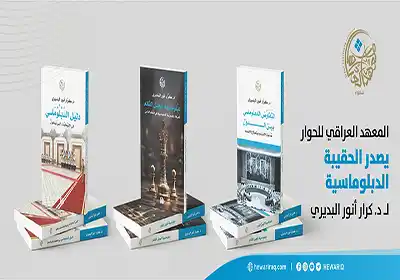
The Iraqi Institute for Dialogue publishes "The Diplomatic Portfolio" by Dr. Karrar Al-Badiri
Invitation to the 79th issue of Dialogue of Thought
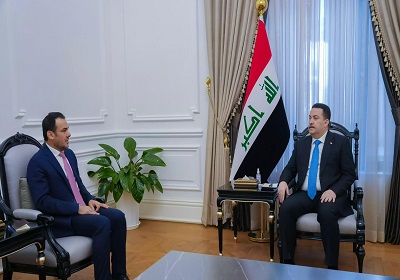
Prime Minister: The path of development will make Iraq a regional political and economic powerhouse
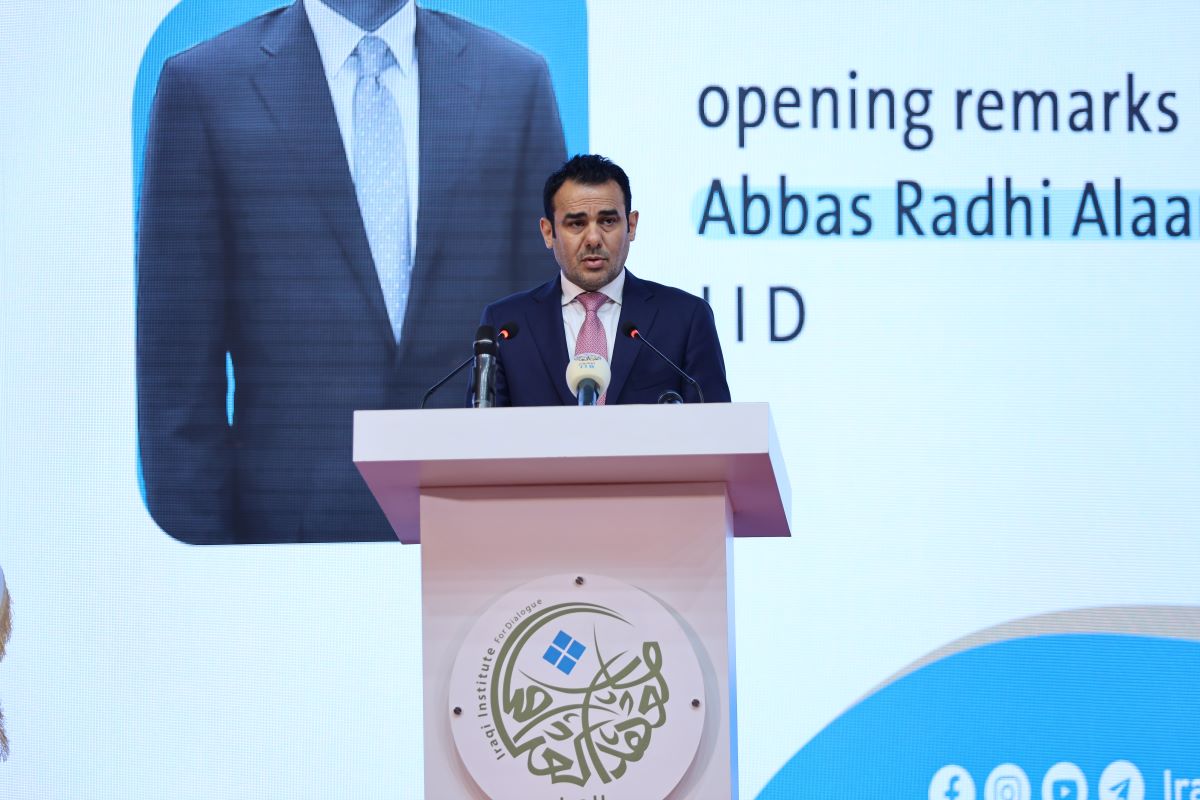
Speech of the Director of the Iraqi Institute for Dialog at the Sixth Baghdad International Dialog Conference
Seventh Baghdad International Dialogue Conference Call for Papers
Comments