


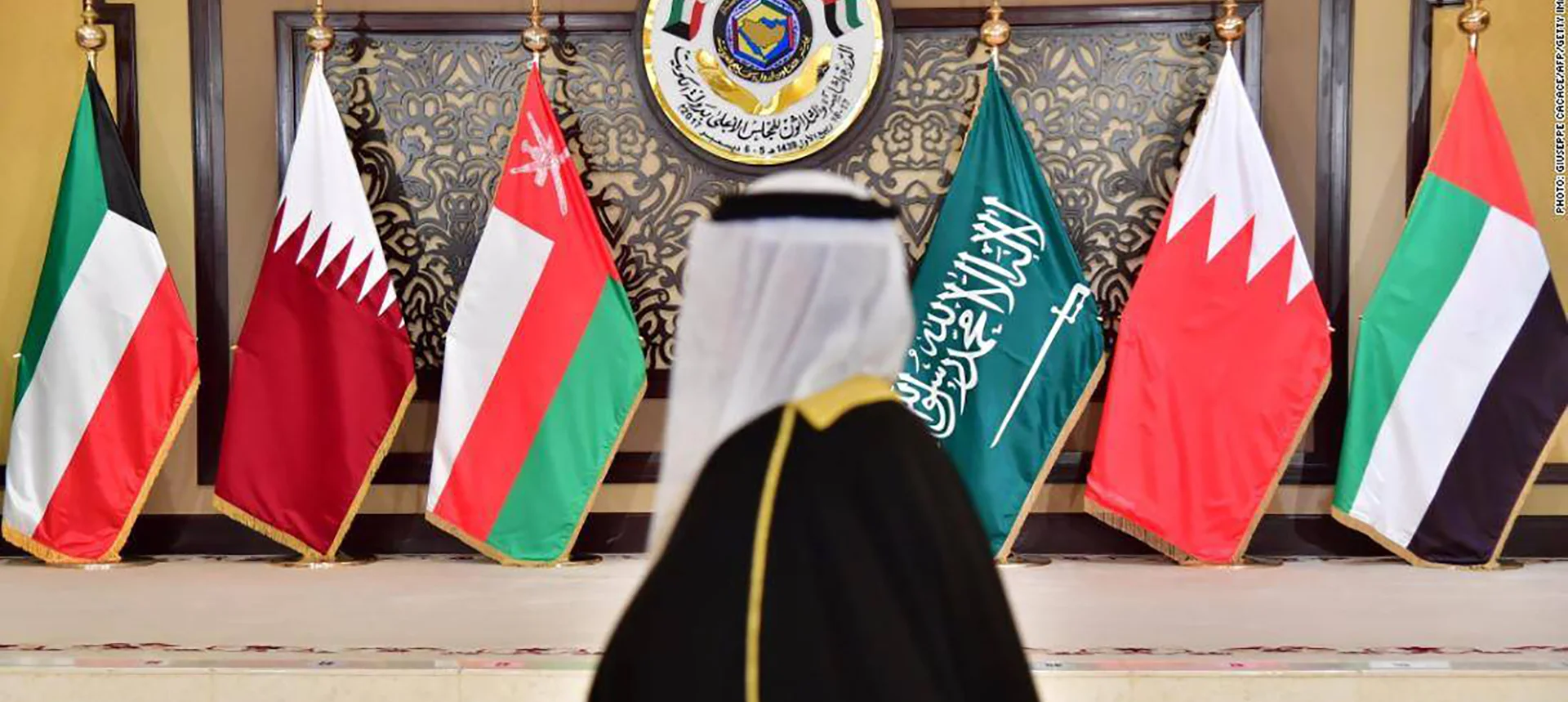
Why does stability pass through the two banks of the Gulf?

If the U.S.-Iran agreement sees the light of day, will it be a prelude to a new phase of stability and prosperity in the Middle East, or will it be nothing more than a temporary truce or a “combatant break” that precedes a new round of conflict?
Most analyses look at the future of the region from the standpoint of the U.S.-Iran relationship or the Iran-Israel conflict, but I believe that the most important question lies elsewhere: Will the interactions between the two sides of the Gulf be the decisive factor in shaping the next stage?
In this sense, I believe that the future of the region will not be determined by the nature of the agreement itself as much as it will be determined by the nature of interactions between Iran and the GCC countries, because the events after February 28 proved that the Gulf region is no longer just an arena for regional competition, but rather an influential space in the equations of security, stability, energy, regional and international balances.
Israel's Dilemma
The Israeli entity, in my estimation, proceeds from a security approach based on the pursuit of absolute rather than relative security. According to this vision, any regional power with significant military, economic and human capabilities could in the future become a potential threat to the security of the entity. And for this, they seem more inclined to a regional environment that is weak or unable to produce power balances independent of it. And from here one can understand part of its policies towards the major regional powers in the region, whether it is Iran, Turkey, or even some of the emerging Arab powers. The presence of regional actors capable of influencing their strategic surroundings limits Israel's margins and limits its ability to shape the regional security environment.
In this sense, overall regional stability is not necessarily seen from the Israeli perspective as a pure gain, if it is to lead to the emergence of regional centers of power capable of having wider margins of independence and influence.
The Limits of the American Role
While stability in the Middle East is clearly in America's interest, experience has shown that US policy in the region is not entirely divorced from Israeli considerations. Numerous studies have suggested that pro-Israel lobbyists have a significant influence within U.S. decision-making, though the extent and limits of this influence remain a matter of debate among researchers.
And so any shift in the position of an American administration does not necessarily mean a permanent shift in American policy. A new administration may come and return to different approaches, as happened in the Iranian nuclear deal file when Washington withdrew from understandings previously signed by a previous administration. And it is difficult to rely solely on the United States as the ultimate guarantor of regional stability, because its policies remain vulnerable to changing administrations, internal calculations and international shifts.
Why the GCC and Iran?
"In contrast, the most influential factor in the coming period appears to be the nature of interactions between the two Gulf shores." The Gulf states and Iran share the same geographical area, and are linked to the most important energy and maritime trade routes in the world, and any escalation between them is directly reflected in the energy markets, investment, navigation and international trade.
By virtue of the nature of their economies and their dependence on stability, development and attracting investment, the GCC countries cannot afford long cycles of open conflicts. And at the same time, Iran, after decades of sanctions, pressure and conflicts – direct and indirect – the most recent of which was what happened after February 28, seems to be concerned with avoiding sliding into wide confrontations that drain its resources and capabilities.
"Recent developments have shown that some GCC states are becoming more engaged in de-escalation efforts and more aware of the strategic and economic cost of any large-scale confrontation in the region." And this shift gives these capitals increasing weight in shaping the future of regional interactions, not only through their economic and political capabilities, but also by adopting approaches that are more independent of the sharp polarizations that have characterized the region for decades.
An opportunity to reshape the region
"If the current understandings evolve, complement the efforts led by Pakistan and Qatar, and shift to a longer-term path, its effects could extend to a number of complex regional files, from Lebanon and Yemen to Iraq and Syria, potentially contributing to easing tensions and opening the way for more stable regional arrangements."
The country's role can also be an important factor in this process, given the policy of maintaining channels of communication with various parties and moving as far as possible away from sharp regional polarization. This approach has given Doha the ability to play mediating and bridge-building roles in moments of tension, making it a helpful element in any path aimed at de-escalation and enhancing stability. This does not mean the end of differences or the disappearance of conflicts, but it may open the door to a more rational management of regional rivalry, away from the logic of permanent confrontation.
conclusion
In my opinion, the future of the Middle East depends not only on international agreements, nor on the change of administrations in Washington, but on the ability of the regional powers themselves to produce a stable equation to manage their differences and interests away from the external variable.
More importantly, real prosperity is not imported from abroad and is not imposed through international understandings, but is shaped from the inside out. When countries build stability, promote development, and expand areas of cooperation, they are better able to take advantage of international opportunities and protect their interests.
If the Iranian-Pakistani-Qatari track succeeds in moving to building sustainable understandings about the next stage of the region's interactions, we may witness the beginning of a different stage of stability and prosperity that will be reflected in the overall files of the region. If regional relations remain trapped in the logic of open conflict, any agreement will be little more than a temporary truce or a militant respite that will soon end.
The real question, therefore, is not whether the agreement will be born, but whether regional powers can turn it into a springboard toward a more stable and balanced regional order, and toward a model of prosperity that starts from within before its impact is reflected in the region's position in the world.
Abdullah.r@copolicy.uobaghdad.edu.iq
+9647811167230
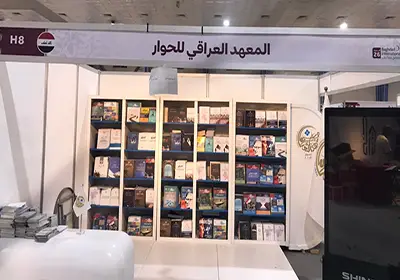
The Iraqi Institute for Dialogue, the logistical sponsor of the Baghdad International Book Fair, opens its own pavilion at the fair
Official agreement between Iraqi Institute for Dialogue and the Iraqi Media Network to sponsor The Seventh Annual International Conference of “Baghdad Dialogue” 2025
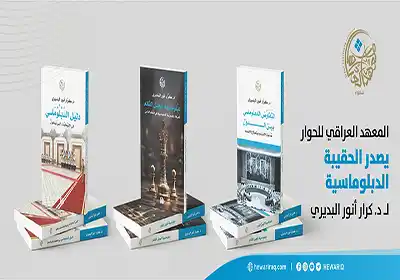
The Iraqi Institute for Dialogue publishes "The Diplomatic Portfolio" by Dr. Karrar Al-Badiri

Invitation to the 79th issue of Dialogue of Thought
Prime Minister: The path of development will make Iraq a regional political and economic powerhouse
Speech of the Director of the Iraqi Institute for Dialog at the Sixth Baghdad International Dialog Conference
Seventh Baghdad International Dialogue Conference Call for Papers
Comments