





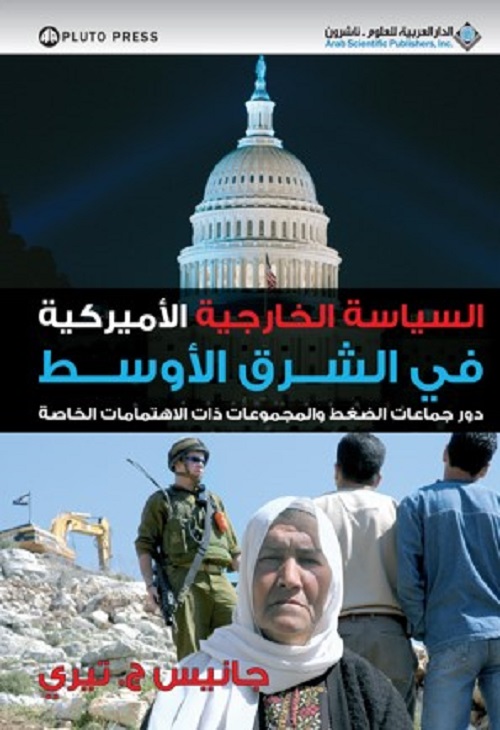
American Foreign Policy in the Middle East. The Role of Lobbyists and Interest Groups" by Janice J. Terry, translated by Hassan Al-Bustani, was released in 2006.
The author points out that companies and groups with special interests spend millions of dollars a year trying to influence U.S. government policy. These lobbies work behind the scenes to try to persuade politicians to represent them and explain their interests.
The list of lobbyists expands to include tobacco and energy companies, anti-abortion and civil rights campaigners. And there is no more pressure in this regard than those being exerted on the issue of the Middle East, and Israel is America’s main ally in the Middle East, and helps the United States maintain its dominance in the region.
This book shows how successful pro-Israel lobbyists and local interest groups are in creating government and financial support for Israel.
In the face of this, Arab-American groups and Arab governments have had less success in endorsing their corresponding work programs. Janice Jay Terry shows how special interest groups work, and some lobbying techniques didn't seem more effective than others.
These are explained in a broader cultural context, showing how the American media—and the public at large—view the Middle East. To explain how these lobbyists work, Terry goes on to examine specific cases such as the Sinai and Camp David accords under Presidents Ford and Carter, the dispute between the Greek and Turkish lobby over Cyprus, and the major campaign against the Arab boycott. Using key sources and unpublished material from various presidential libraries, the author excitedly showcases the role lobbyists have actually played in defining U.S. foreign policy in the Middle East.
Fill in the fields, and we will contact you to complete the submission process.
Comments